
Eco-justice education is environmental education that addresses social justice issues. Students ask what is happening to the living world, and then who decided, who benefits, and who pays. Shade and green space aren’t shared evenly, and a class can investigate that. With young students, the work stays at the scale of the schoolyard and the block, not global policy.
What does eco-justice education look like with young students?
At this age, students have many questions and comments about fairness in their own lives. Whose turn is it on the play structure? Who has access to a big yard, and who has none? Who decides if a plant is a weed or a flower worthy of staying in the class garden? Teaching eco-justice means inviting students to put their own sense of fairness to work on the living world, and taking their answers seriously.
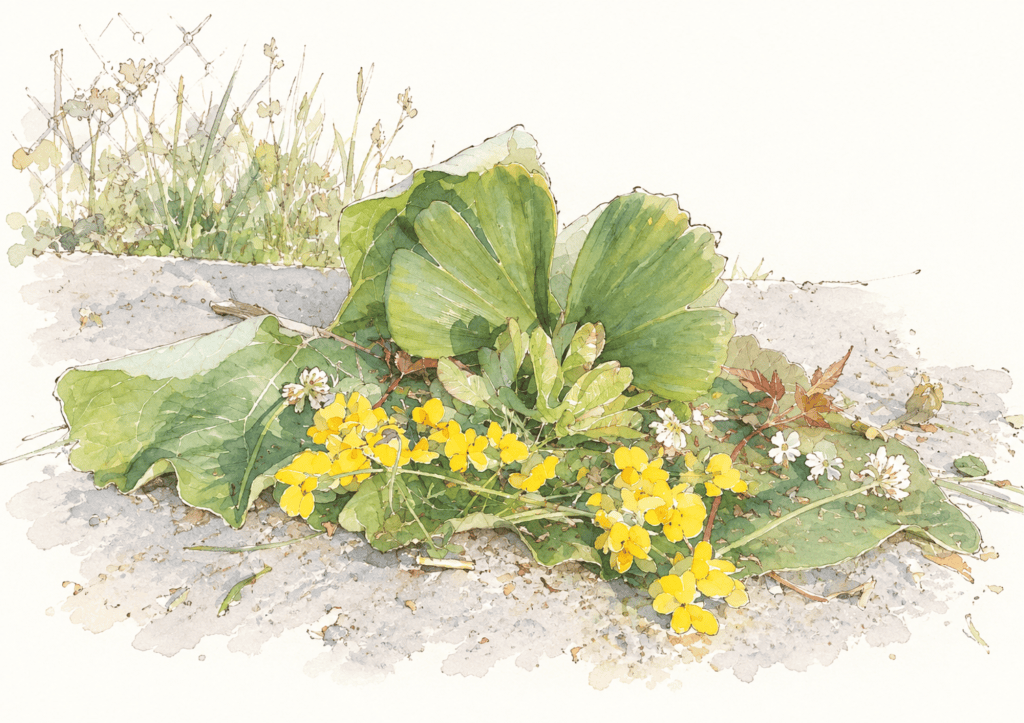
We had spent September learning the flowers in the front garden that everyone else called weeds. My students knew chicory and bird’s-foot trefoil by name, in two languages. We were extra excited to see milkweed growing in the cracks around the perimeter of the staff parking lot. Then, one morning, a well-meaning landscaping crew arrived for scheduled maintenance. I heard the giant weed whacker and ran out, saying, “Not the milkweed!!” The crew was reluctant to stop. That would mean they had not done the job they were contractually obligated to do. I said I would take full responsibility, but the damage was done. The yarrow and buttercups were gone. Students arrived to find bare patches where flowers once were.
They grieved, then grew upset. I recognized the indignation right away: someone decided this, and nobody asked us, and it wasn’t fair to the flowers or to us. They were seven, and they had got to the eco-justice question on their own: who decides, and was that fair?
Why does one neighbourhood have old trees and another none?
Mostly because people decided. A developer chose what to leave standing when the street was built, and the city chose where to plant after that.
In 2025, researchers at Concordia mapped tree cover against surface heat across Montreal. A ten per cent increase in tree cover was linked to land surface temperatures about 1.4°C lower (Concordia summary, Li, Kross, Ziter and Eicker, Urban Forestry & Urban Greening, 2025). Outremont and the West Island, the wealthier boroughs, were greener and cooler. In Saint-Léonard, Montréal-Nord and Anjou, where incomes are lower and more residents are visible minorities, there was less canopy and more heat. So the question a student asks on the way to school (“why does that street get trees and mine doesn’t?”) has a real answer.
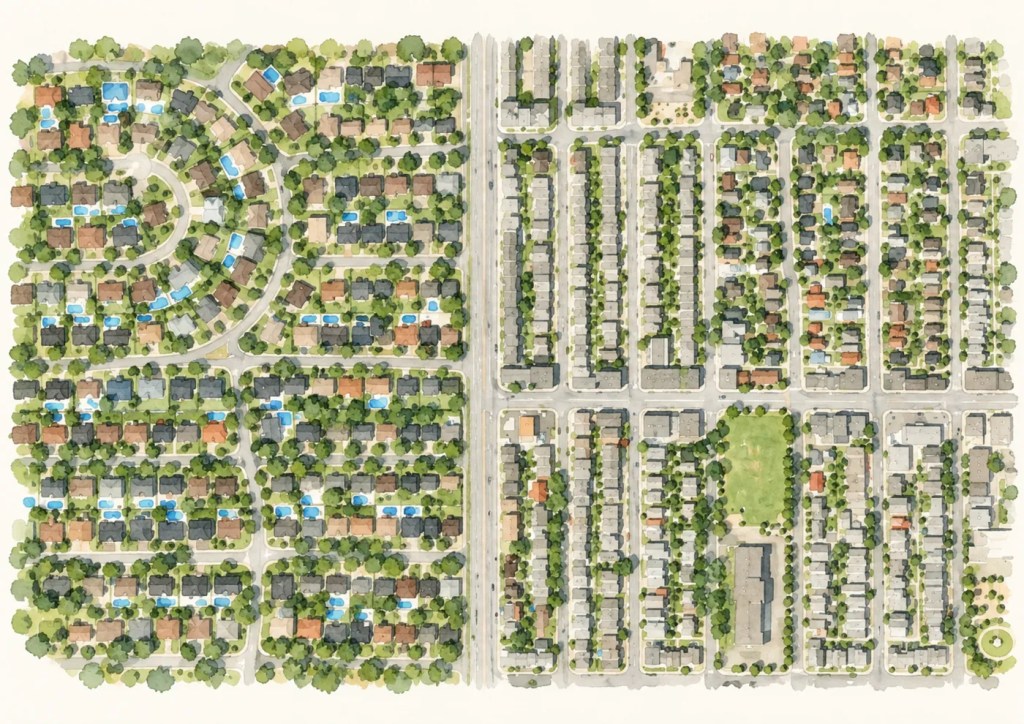
Illustration based on aerial imagery. Sources: Ville de Montréal open data licence, CMM orthophotos guide, McGill
How did this change my own teaching?
For a long time, most of us who taught environmental education looked alike and had come to it the same way: camping trips, a cottage, clean water to swim in. That was my entry point, but many of my students faced inequity in access to outdoor spaces. At one school, some families and caregivers lived in row houses on busy streets. At my most recent school, this inequity became even more evident during COVID; students who lived in apartment buildings couldn’t just go outside into a backyard. Accessing nature or green spaces required some planning.
For some of my students, the schoolyard or our visits to nearby nature were the only reliable green space in their lives. They had no backyard and no cottage on the weekend. Once I saw that, taking the class outside stopped looking like enrichment.
What does this look like when students lead it?
It looks like students who ask “Who decides?” without being prompted learn that knowledge is a first step in eco-justice, but they still need to do something with the answer. For example, after we planted a songbird garden on a patch of dirt bordering the fence, students trampled it as they arrived for the day. Walking through the garden was more intriguing than walking on the asphalt path beside it. Some plants were crushed. To raise awareness, my students made signs and drew on the pavement, informing other students (and adults) that this area was a songbird garden.
As students keep asking who decided, they will eventually ask fundamental questions about the land itself: who it belongs to, and what living in relationship with it means. As an educator, a settler teaching on unceded Algonquin Territory, I take those questions seriously enough not to squeeze them into a paragraph here. I’ll post more information in this site’s Indigenous perspectives thread.
How do you teach eco-justice without the doom and gloom?
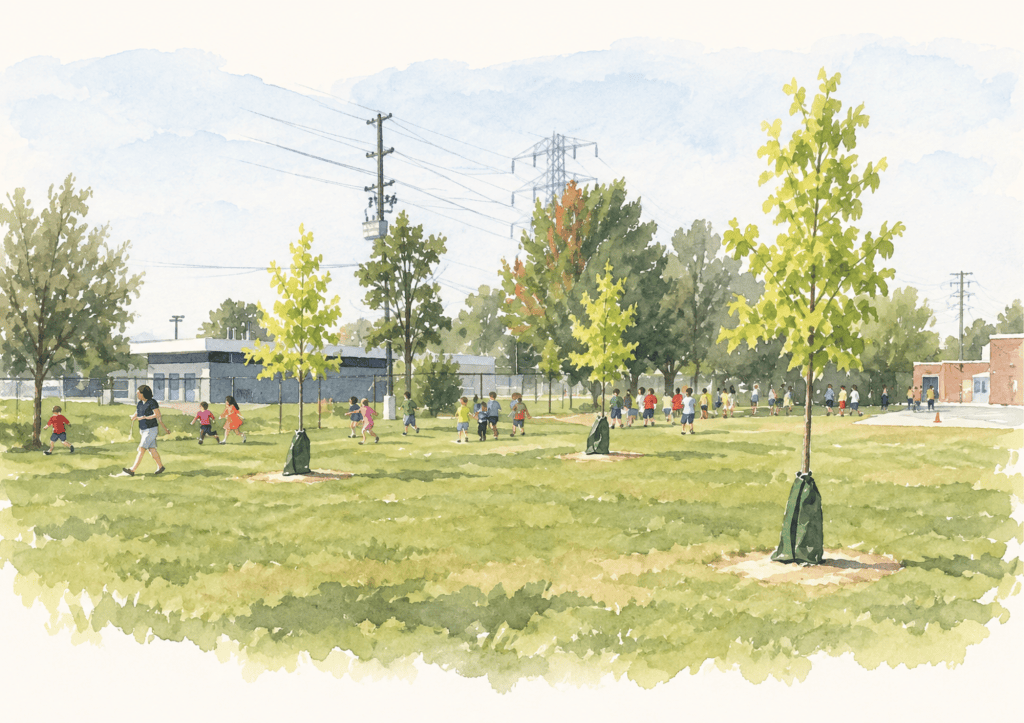
To start, pick an unfairness the class can actually investigate and skip the ones they can only feel bad about (rainforest degradation in South America). Pick an issue close to home, even better if it’s something that affects their day-to-day at school. One year, I noticed some of my students avoided recess, and I often found them inside “getting water” two or three times every recess instead of playing outside. When I asked what was going on, they said it was too hot, and there were no shady spaces to hang out. As we moved forward with a modest school-ground greening plan, their input informed our multi-year plan. The City of Ottawa forestry grant funded the planting of seventeen trees that same year. It would take many years for them to cast enough shade, but the students felt like they saw their impact. Exploring injustice at this age needs to be coupled with action so students can see the impact of their advocacy. I go into this at length in Teaching Sustainability to Elementary Students Without the Doom and Gloom.
Where do you start with eco-justice education?
On your next walk outside, ask the class one question and follow it wherever it goes: who takes care of this place, and who decided that? Any answer you get starts a real eco-justice inquiry. Write their answers down before you go back inside, because that list is your evidence that the thinking happened.
What Is Environmental Inquiry? covers what to do with the question after that. If getting the class outside at all is the sticking point, start with Outdoor Learning on a Schoolyard: The Big Idea.
If you want a ready-made first walk, the free Listening Walk learning activity guide is on the site.
Questions teachers ask
Is it eco-justice or ecojustice, and is it the same as environmental justice?
Environmental justice is the older, broader term for eco-justice, but it may not include the social justice aspect. Teachers often say eco-justice education when they mean the classroom version. Eco-justice education links environmental protection with social justice by addressing the cultural roots of ecological issues.
Isn’t this too political for elementary school?
Fairness is not partisan, and students already care about it fiercely. How many times have you heard a grade three student say, “That’s not fair,” about any and everything? Developing a sense of fairness is a developmental milestone that begins in elementary school. The work also fits into curriculum you already teach: persuasive writing, investigating, data management, media literacy, etc.
How is eco-justice different from environmental education?
The topic can be identical. A class can study the trees on their yard either way. The difference is whether you stop at how a tree works or keep going to see how the tree came to be in that spot and what the implications are of planting it. Or looking at the way developers in the new subdivisions cut down forests to build houses, losing the tall shade-giving trees only to have to replant young trees. Who decides which trees stay and which ones go?
What if the class asks for change and the answer is still no?
That happens, and that doesn’t take away from the value of the inquiry. Tell the class who said no and why, in plain words, and keep the letter they wrote. Students can handle a no even if it’s disappointing.
How does this connect to Indigenous perspectives?
Eco-justice issues connect deeply to Indigenous perspectives. Questions of land, relationship, and reciprocity sit at the heart of both. That thread deserves fuller treatment than a definition post, and on this site it runs through all three categories. For more on trees and reciprocity, check out a lesson plan I developed for the Elementary Teachers’ Federation of Ontario. https://etfovoice.ca/sites/default/files/docs/curriculum/ETFO_Voice_Spring_2023_Curriculum.pdf


Leave a comment