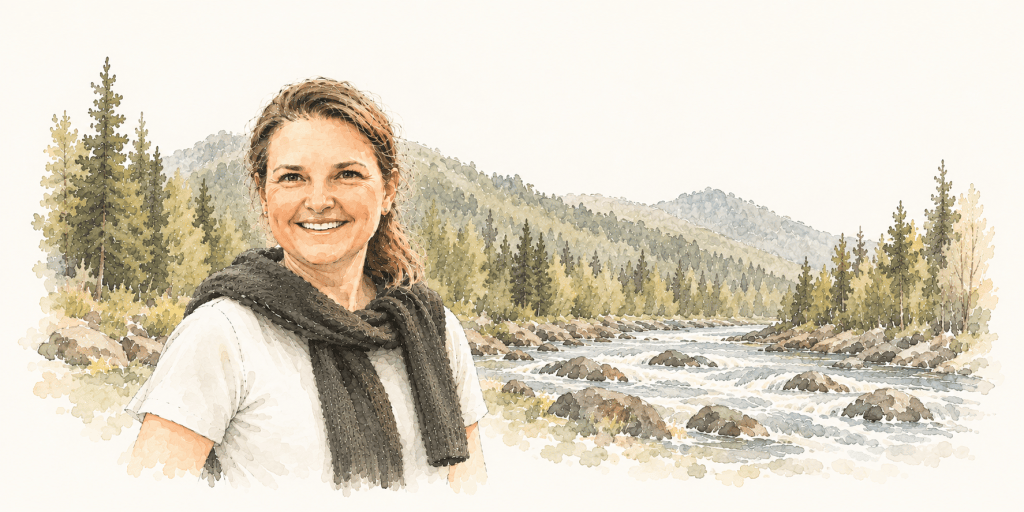
About Me
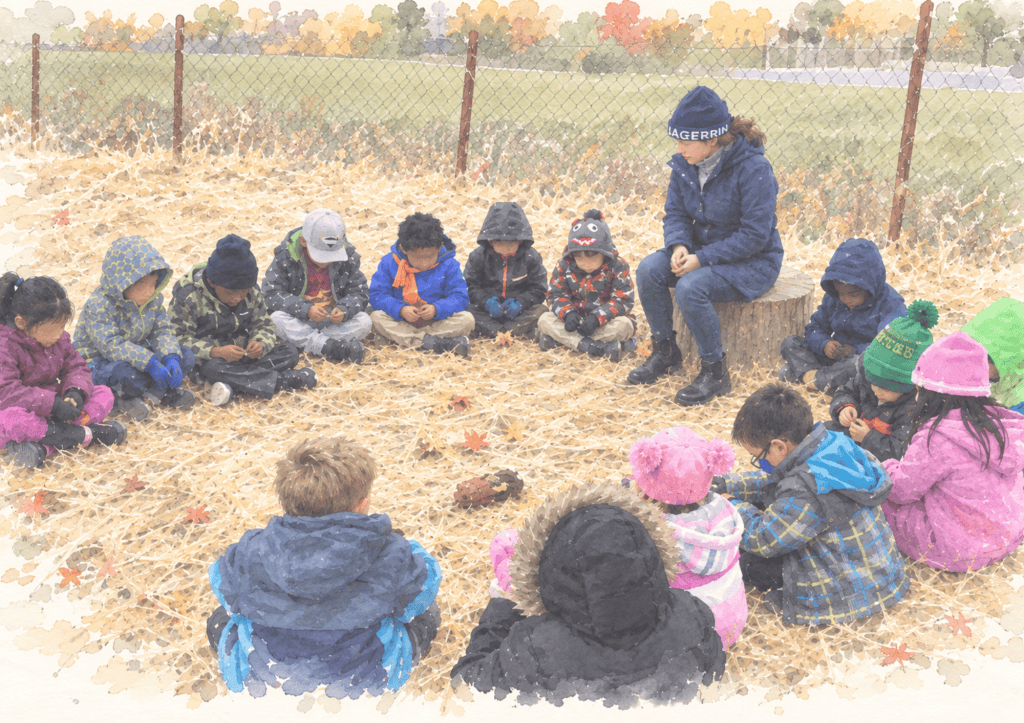
I am a French Immersion teacher and currently work as an itinerant social-emotional learning teacher. I still work with students every day, and whenever I get the chance, I take them outside to learn.
I never set out to become an outdoor educator. In my second year as a public school teacher, I was voluntold to sign up for a two-part professional learning session at our school board’s outdoor education center. And that was that. I was hooked.
That was over a decade ago! Since then, I have uncovered a passion for outdoor education, and even trained as a Forest School practitioner. I have published lesson plans, developed and facilitated workshops, and written and instructed Additional Qualification courses for teachers all about learning outdoors.
Getting there did not take years of trial and error. It took years of looking for yes.
There was always a no on offer, a reason not to go outside. But a bit of know-how got me past it. So did a bit of confidence. Mostly it was the students. Their engagement and deep learning kept me going.
Much of what I share in these blog posts is a look back at my early experiences taking students out into nature, with visits to the forest and learning on ordinary school grounds.
And I am so excited to share those moments with you. The learning activity guide collections have been designed to be used in your schoolyard today, however comfortable you are outside, to get your students thinking outside.
🙂 Jacqueline
Workshops
I develop and facilitate professional learning for educators. Current workshops include:
- Rain or Shine: Let’s Learn Outside
- Math Learning Trails
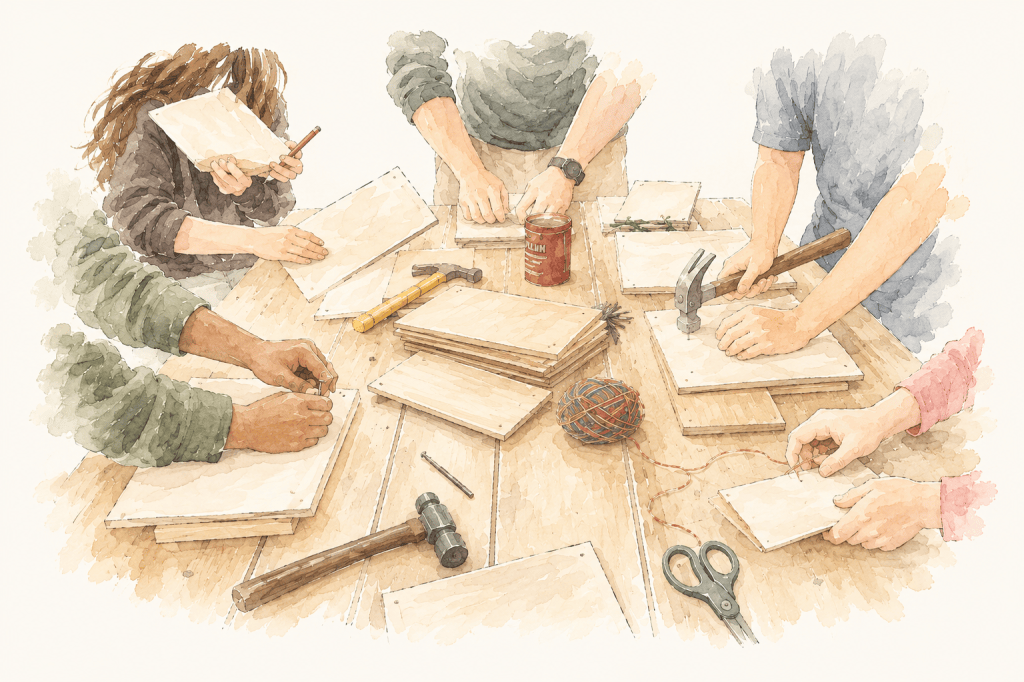
- The Outdoor Makerspace
- Mindfulness and Well-being Outdoors
- Eco-Justice and Climate Change
To enquire about a workshop, email hello@thinkingoutside.ca.
What runs through everything
Social-emotional learning
This is where I started on my outdoor learning path, and it is the work I now do full time. Outside is where I have watched anxious children settle, where a quiet child finally shares their thinking, and where a class learns to be still without anyone telling them to be still. It is not a bonus that happens alongside the learning. Many days it is the lesson.
Indigenous perspectives
Weaving Indigenous perspectives into my teaching practice was not an add-on or a box to tick. I write about this from where I stand, as a settler living on unceded Algonquin Territory, out of my own practice and with the guidance of Indigenous educators who have been my teachers.
You will find references to them in Starting Out, Going Further, and Digging Deeper activities. As you begin to take students outside, the weaving might be reading a book by an Indigenous author. Further along, it might be students writing their own land acknowledgments, or talking about sustainability by looking at Indigenous ways of knowing.
If you are worried about “getting it wrong”, that is expected. You might make mistakes. That is not a reason to leave Indigenous perspectives out of your outdoor teaching practice. And if you do, you correct them, and you do better next time. That is an act of reconciliation.
French Immersion and multilingual learners
I teach in Core French and French Immersion classes. Outside has been the best vocabulary lesson I have found. In French as an Additional Language pedagogy, we talk constantly about authentic learning situations. Being outside is the most authentic one there is: students genuinely want to tell their classmates what they saw, in what might be their second, third, or fourth language.
Where a lesson needs words pre-taught, the guide says so.