
Forest school is regular, repeated time for the same group of students in the same natural space, across seasons and almost any weather, with student play leading and the educator following instead of directing. It is a specific practice with formal training behind it. My best year of it happened on a paved schoolyard.
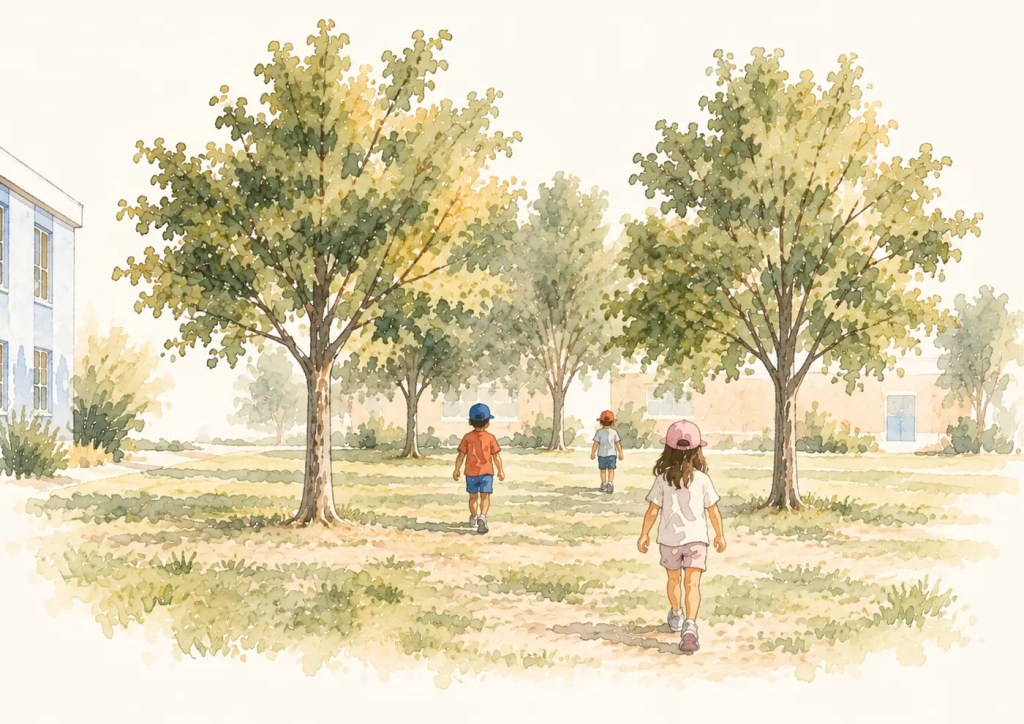
The year I was meant to take my students to Forest School, we could not go. We were supposed to spend every Tuesday in a real forest with forest-school educators. Then work-to-rule labour action cancelled all field trips. Instead of us going to the forest, the educators came to us, out onto our uninspiring yard. I remember being embarrassed about the yard.
I should not have been. I learned more about Forest School on that yard than I did in the forest.
What happens during a Forest School session?
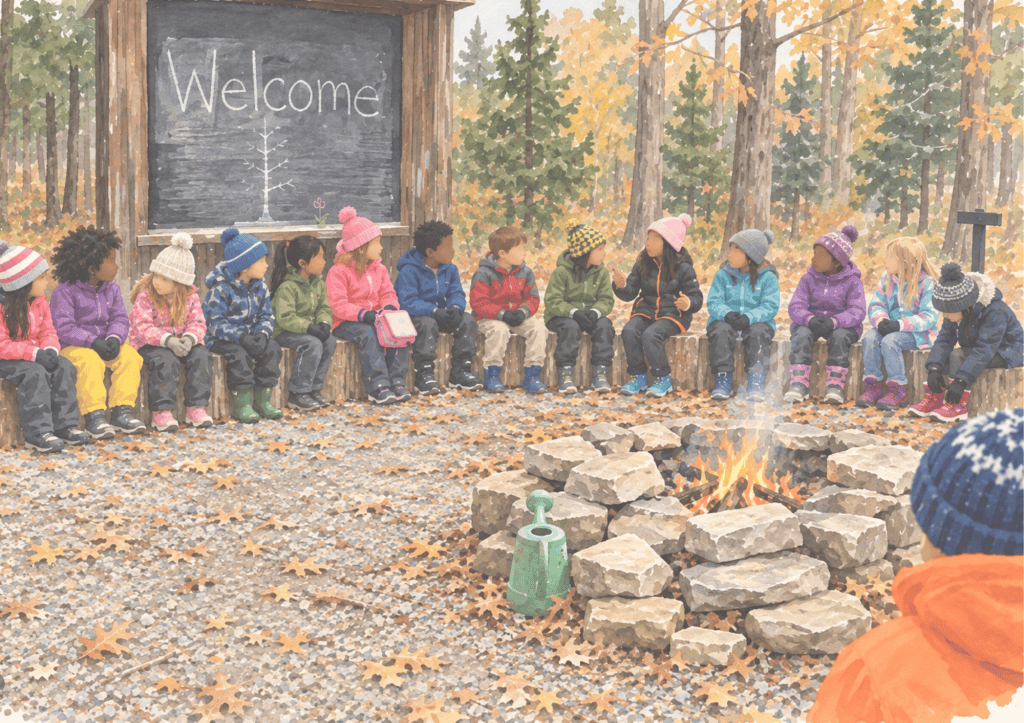
The Child and Nature Alliance of Canada, which trains Forest and Nature School practitioners here, describes the practice as a sustained process of regular and repeated sessions in the same outdoor space, led by educators who share power with the learners, where children’s play, self-directed and freely chosen, is valued in itself. In practice, that means the students decide what to do. The educator watches and brings them materials when they need them.
Our Tuesdays ran on those principles. We followed the same rhythm each week instead of a new lesson plan, and every session ended in a circle where we named what we had learned. We called it the Story of the Day.
Where did forest school come from?
It grew out of Scandinavian outdoor traditions and the idea of friluftsliv, or open-air life. In 1993, a group of nursery nurses from Bridgwater College in Somerset visited Denmark to look at the pre-school system there. They came home and started running a Forest School of their own.
In Canada, the practice usually goes by Forest and Nature School. Forest School Canada was founded in 2012 and is now part of the Child and Nature Alliance of Canada, which runs the national practitioner course. I took it, and it changed how I teach. How I found my way into that course is a story of its own, in Why My French Immersion Students Wouldn’t Take Risks.
Is Forest School the same as outdoor learning?
No. Forest school is one specific kind of outdoor learning. If you take your class out for a math trail you planned and led, that is good teaching, and it is not Forest School, because you were driving it. You are doing Forest School when your students lead and when you keep returning to the same wild-ish place over a long stretch of time. For how the wider umbrella fits together, see Outdoor Learning on a Schoolyard: The Big Idea.
That is why Forest School sits at the Digging Deeper end of this site. Following students’ play with confidence takes practice, and so does finding the curriculum inside what they are already doing. If planning around your students’ choices is new to you, What Is Emergent Curriculum? sits right next to this one.
What can a public school teacher borrow from forest school?
You can borrow almost all of it except the trees.
- Repeated visits to the same patch of ground
- Weather treated as part of the lesson instead of a reason to stay in
- Real stretches of student-led play, not play handed out as a reward for finishing work
- A closing circle where students name the learning out loud
- The discipline of watching before you step in
We managed every one of those on our yard. Students who visit the same patch of ground all year start noticing it, and they start looking after it.
Field Note
The worm under your yard is a newcomer
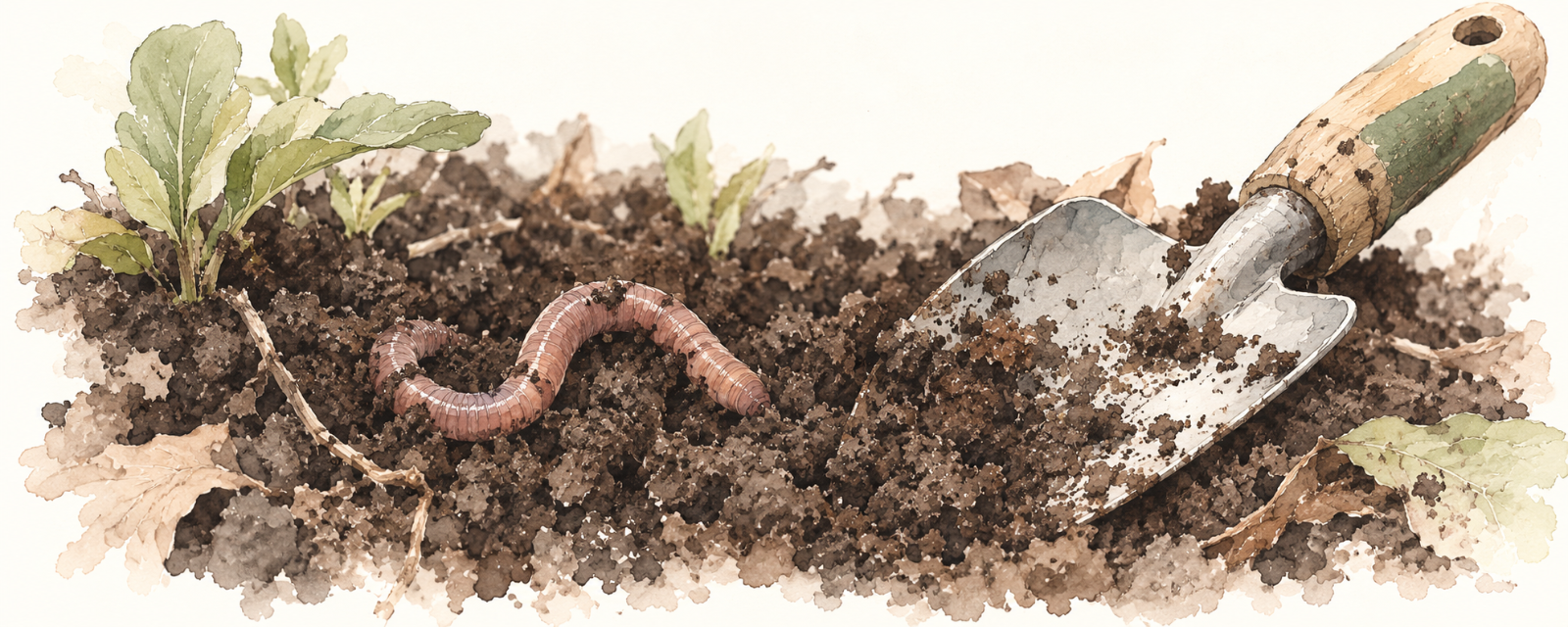
Kneel over a worm on a Canadian schoolyard, and you are almost certainly looking at a newcomer. The last glaciation, some twenty thousand years ago, scraped our native earthworms off along with most of the soil, and the forest that grew back over the next twelve thousand years grew back without them.
The worms in our ground mostly arrived with European settlers about four centuries ago, hitchhiking in crops and garden soil. A few native species hung on in places the ice never reached, out on the west coast and up in the Yukon, so the worm your students turn up in Ontario is a recent arrival on very old ground.
Sources: Canadian Wildlife Federation, “Worming Their Way In” · Nature Conservancy of Canada
Do I need certification to take my class outside?
No. Certification is for practising Forest School specifically, and it is worthwhile training. Taking your students outside to learn requires no credential beyond the teaching qualification you already hold.
I do not call my schoolyard work Forest School. A schoolyard program that borrows forest school’s principles is forest school-inspired, and it can be excellent. Learning and teaching at a real forest school remains some of the best professional learning of my career.
Can a public school actually do forest school?
The full model depends on things most public school teachers do not control: long unbroken blocks of time, an off-site natural space, and adult-to-student ratios most schools cannot staff.
So start where you can, and ask for help. Many parents will sign up if you schedule the outdoor block for the start of the day.
If you want to borrow one thing this term, borrow the closing circle. After any time outside, gather the class and let each student say one thing they did, found, or wondered about. Do not turn it into a chart on the board. Jot the answers down yourself afterward, and you will have a record of what your students learned outside.
The free Listening Walk works as a first session in the same spirit. Get the free Listening Walk Learning Activity Guide, or read What Is a Listening Walk? first.
Questions teachers ask
How do I get certified in Forest and Nature School in Canada?
The Child and Nature Alliance of Canada runs the national course. It is five days in person, either in a row or split across two weekends, followed by optional online coursework you finish within a year if you want the certification. Dates and current fees are on their course page.
How often do sessions have to run to count as forest school?
The UK association that set the original standard asks for sessions at least every other week with the same group, over an extended period. It sets a minimum of 24 consecutive weeks in one year, or 12 across two. You can read their full principles and criteria.
Is Forest School only for the early years?
It started in early years settings, and much of the writing still says “children” for that reason. I used the same principles with my own class, and they worked.
What do my students need to wear?
They need the same clothes they would want for any cold or wet day outdoors. I cover boots, layers, and the students who arrive without either in What Do You Need to Take a Class Outside?
Is Forest School backed by research?
Yes, if you are careful about which research you mean. The strongest evidence is about nature and learning in general: a 2019 review in Frontiers in Psychology pulled together converging evidence that time in nature improves attention, lowers stress, and deepens engagement with learning. On the play side, Canadian researchers led the 2015 Position Statement on Active Outdoor Play, renewed in 2025, which concluded that access to active outdoor play, with its risks, is essential to healthy child development. Research on forest school as a specific program is younger, and much of it comes from small studies, so I am careful not to claim more for it than it has earned. The research I lean on hardest, about risk-taking, is in Why My French Immersion Students Wouldn’t Take Risks.


Leave a comment