
Digging deeper into outdoor learning means handing students more of the decisions. You have taken your class outside, and your routines are working. Now you step back: students follow their own questions and help decide what success looks like, while you stay accountable to the curriculum. It also means you stop doing it alone and bring one colleague along.
What does it mean to let students lead outside?
In the early days, you plan the activities and the students go looking in the yard. Later on, some days you set the lesson aside and find the curriculum in what the students ask.
Students who have watched the same schoolyard for months start asking their own questions. This is emergent curriculum. Kindergarten educators already teach this way. Most primary teachers do not, so it is a real stretch.
Field Note
The very patient caterpillar
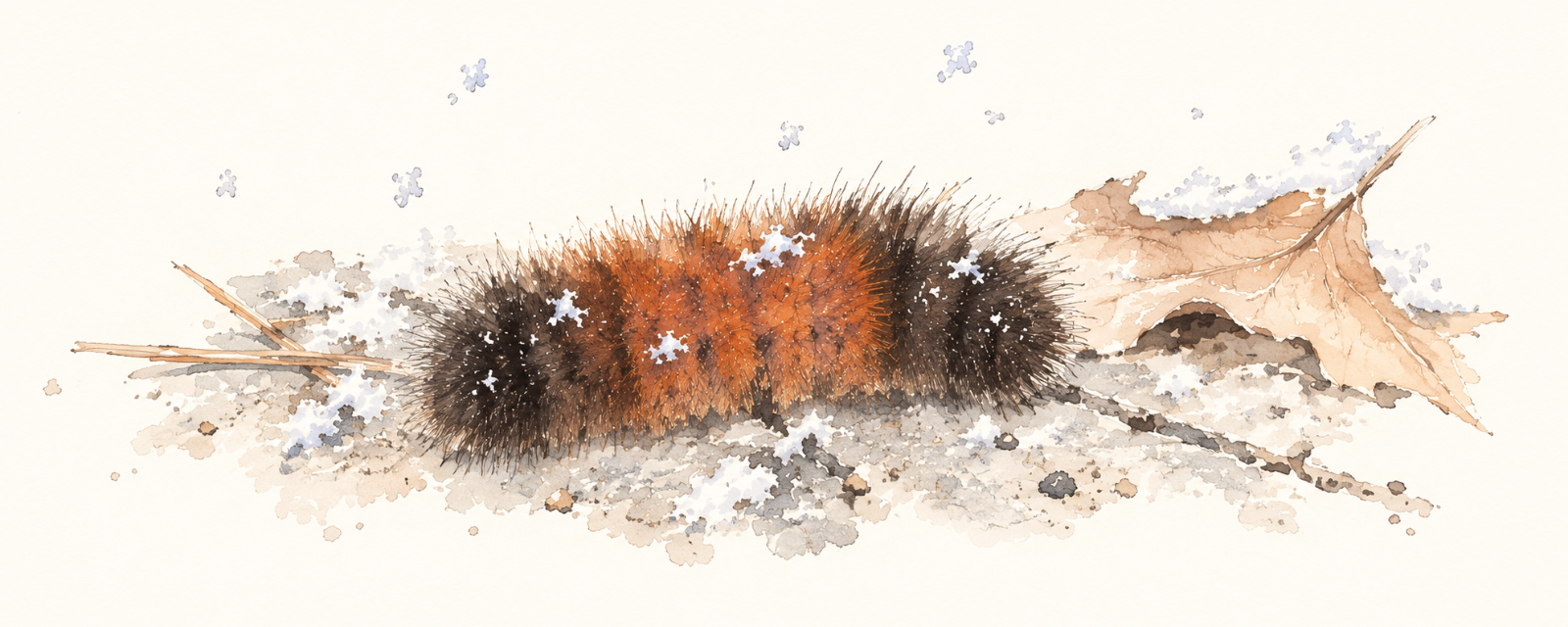
Students find woolly bears, the fuzzy orange-and-black caterpillars crawling across the pavement in the fall and ask so many questions: What is its name? Where is it going? What does it eat? Why is it sleeping? Is it lost?
If you see a woolly bear crossing the pavement in October, it may seem lost. It is searching for somewhere sheltered to spend the winter, under bark, a rock, or a fallen log, and it will travel a surprising distance to find the right spot. It stays a caterpillar all winter, and where it settles, it freezes solid.
In spring, the caterpillar thaws; it feeds for a while, spins a fuzzy cocoon, and comes out as an Isabella tiger moth. It wasn’t lost: it was only waiting.
Sources: Space for Life (Montreal Insectarium) · Whistler Naturalists
How do you keep student-led learning accountable to the curriculum?
On the days students followed their curiosity away from my plan or provocation, I still held on to the learning goals I was assessing. Whether it was a Big Idea in the Science or Social Studies curricula, I brought the students into the process. Before our outdoor learning sessions, I would:
- Review the concepts we were going to explore, ensuring students understood the expectations.
- Invite students to consider how they might demonstrate what they had learned.
- Write the success criteria together using “I can” statements.
- Remind students during the initial gathering circle what I would be looking for as we explored the yard that day.
- Record what students say and do through observation and conversation.
This put the skills students were expected to demonstrate in context, and their learning went deeper because they helped decide what success looked like.
How do you bring a colleague along?
You may be one of the only educators engaging in outdoor learning at your site. Collaborating with a colleague makes outdoor learning more enjoyable and sustainable in the long term. You only need to find one colleague to start. Invite a colleague to join you for a single shared outing that you plan and lead. Your colleague will see your students at work and decide for themselves whether to come back.
In my first years taking students outside, I had an excellent teacher partner. Together, we encouraged each other to keep going. If I were on my own, I may have found a reason to stay inside on those rainy, damp days when outdoor learning is more challenging. Having a partner meant I was accountable to someone else. Plus, it was fun to conspire together on ways to get our students outside and learning.
In the years after, at different sites, I was grateful for the colleagues who came along.
Why does stepping back feel uncomfortable?
Because we feel responsible for our students’ learning, and stepping back can feel like handing that responsibility away. A teacher moving through the class with a lesson plan looks like teaching. A teacher standing at the edge of the yard, watching, can feel like slacking off, and the first few times it feels that way from the inside too.
You have to trust that your students want to learn. They are curious and capable, and a question they chose will carry them further into learning than a question I assigned.
You also have to trust that watching is work. While students investigate, you assess: listening to their conversations, noting who asked what, and watching how they handle a problem. What you catch gives you a fuller picture of a student’s learning than a finished product can, because you are seeing the thinking as it happens.
This is the I Do, We Do, You Do we already use indoors: teacher modelling, guided practice, independent work. Letting students follow their own questions is the independent work.
As you pull back, keep one routine going, like journal writing, so you can still reassure yourself they are learning. And keep the routines that make stepping back safe: the signals, the boundaries, and what to pack for outdoor learning can all be found in What Do You Need to Take a Class Outside?
Questions teachers ask
Is student-led learning realistic outside of Kindergarten?
Yes. The curriculum expectations stay the same, and you start from what the students already care about. With a bit of trust, your students will blow you away. Gather evidence of student learning through observations, conversations, and artefacts. Using multiple data sources makes assessment and evaluation more reliable
How do I document learning that happens as talk and action?
Decide before you go out what you are listening for, and gather evidence of that. Take anecdotal notes and photos. Tools for this are coming to the store this fall.
Can I lead PD on this?
You can, if you have a practice worth sharing. Your school, board, and local associations are usually looking for exactly this. Start with a professional learning community at your school or look for opportunities within your school board. I now run workshops as part of my work. My practice improved as I began explicitly teaching how I taught outdoors. Having had the privilege of running workshops and facilitating professional learning, I encourage anyone to look for opportunities. The workshops I currently offer are on the About page.
Related reading: Outdoor Learning on a Schoolyard: The Big Idea · Going Further: Teaching the Curriculum Outdoors · Taking Your Class Outside for the First Time


Leave a comment