
Play-based learning is an approach in which students learn through their own play, and the teacher sets up the materials and the space instead of directing what happens. In play, students set their own problems, argue over the rules, get things wrong, and try again. It sits on a continuum from teacher-directed to free play, and your job is to find the sweet spot in the middle.
I am a French Immersion teacher, not an early-childhood specialist, so I came to play-based learning slowly, by taking students outside and paying attention to what happened.
What does play-based learning look like on a continuum?
Learning experiences in nature take place along a continuum from more teacher-driven outdoor experiences to free play. Too much adult intervention and the teachers end up doing most of the wondering; too little and the play devolves into “birthday party play”: highly entertaining, but little learning.
The skill is finding that middle and adjusting as you go. Set out materials and a provocation, an object or a question the students can respond to, then step back and watch what they make of it. When they run out of problems to solve, and the game turns to noise, add one small constraint, so they have something to work out again.
I have written separately about the materials in What Are Loose Parts?.
Didn’t Ontario just move away from play-based learning?
Ontario’s new Kindergarten curriculum, in classrooms this September, does shift the emphasis. Educators are now expected to teach reading and math skills explicitly. Children then practise and apply those skills in play, rather than picking them up through play alone. Play did not get cut. The program names student-directed play, guided play and educator-directed play, which is close to the continuum in that 2015 post. A summary from Queen’s University sets out what changed and what did not.
How do you assess learning during play?
You decide your look-fors before you go out, and then you watch.
Years ago I set up a butterfly habitat challenge: a pile of loose parts and not much else. One group built their habitat and then added a television and a carpet. When I asked about the television, its builder explained, “My butterfly needs a TV so he can spend time with his family.” They tucked in leaves they called milkweed and set out water. On a worksheet, the television would have counted as a wrong answer. Watching them, I could see what they understood about what a living thing needs: food, water, shelter, and a bit of care.
The evidence you take back inside is your own notes, written while you watch.
Does play-based learning still matter after Kindergarten?
Yes, and it changes shape. Older students build more complicated things and come back to the same game the next day.
The trouble is that some of them, especially in Grades 4 to 6, have decided play is babyish next to a video game. They object to the word more than to the activity, so call it a build or a design challenge.
Field Note
Why the wolf pups never stop wrestling
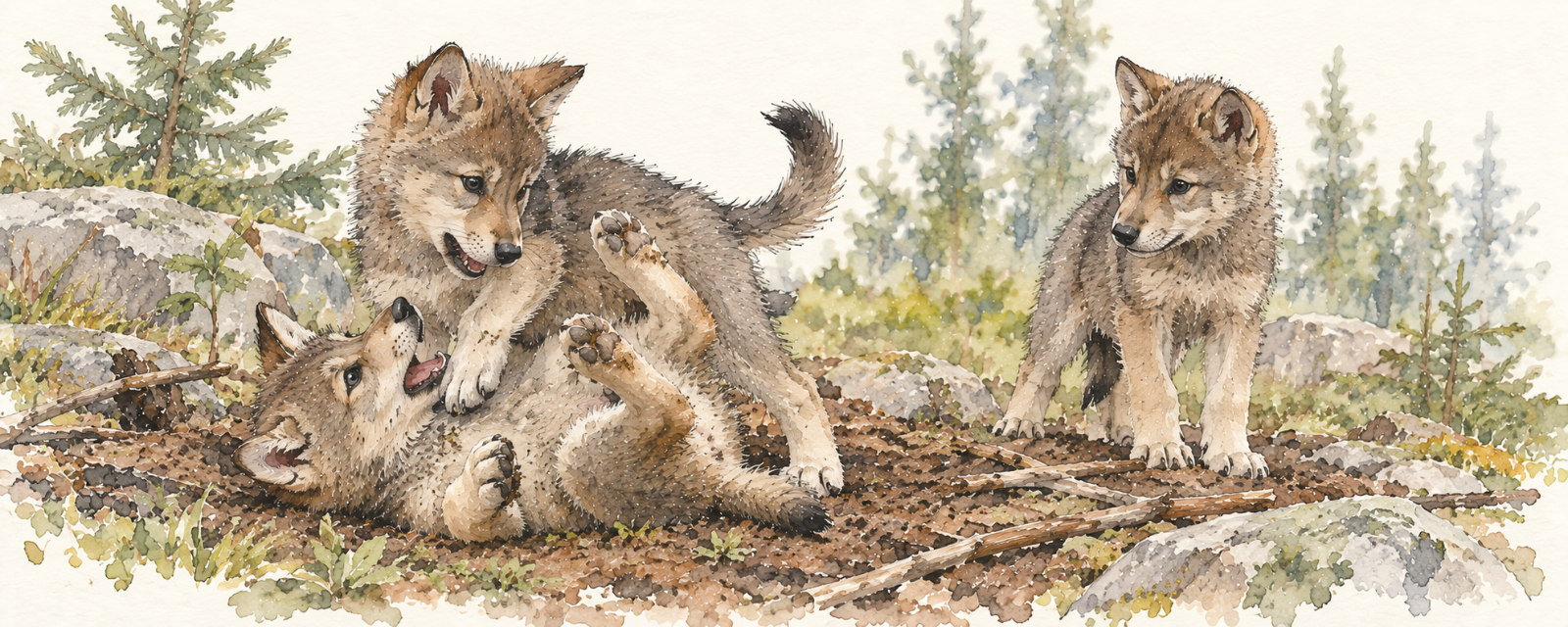
Wolf pups spend their first summer playing. They make clumsy attempts to hide behind rocks, jump out at each other, and they chase one another around a tree until somebody tumbles. Hinterland Who’s Who is blunt about what all that fun is for: frequent play is how young wolves build the skills they will need to hunt.
Ontario’s own wolves raised their pups within earshot of people for decades: on August nights in Algonquin Park, a naturalist would howl into the dark and, some nights, the wolves howled back to a road lined with hundreds of listeners. The park ended the public wolf howls in 2022, but the pups out there are still learning their trade the same way, by playing.
Sources: Hinterland Who’s Who · The Friends of Algonquin Park
What do you say when someone asks why grade 5 students are playing?
The answer is the notes you already took. Say which expectation you were watching for, show what you wrote down about who met it, and keep the conversation is usually short. A parent asking why her grade 5 child is playing instead of getting ready for grade 6 gets the same answer in plainer words: the students are practising what you are about to assess.
The longer version of that conversation is in Outdoor Learning on a Schoolyard: The Big Idea and Digging Deeper: Student-Led Outdoor Learning.
How do I know if I am leading too much?
To see where you sit on that continuum, take one activity you already run outside and try it twice.
- Run it the way you normally would.
- Run it again, but set it up and then stay back.
- Notice who does the wondering each time.
Quiet helps, and the Listening Walk is where I start: get the free Listening Walk learning activity guide.
For more on learning by doing, see What Is Experiential Learning on the Schoolyard?
Questions teachers ask
Do I need loose parts to do this?
No. Students will start a game with whatever is already on the ground. If you want to build a proper collection, see What Are Loose Parts?
Is this just recess?
No. Recess belongs to the students, and you are supervising it. This is a teaching block, and you are working the whole time.
How is this different from inquiry?
Inquiry starts with a question, and play starts with the students doing something, and the two overlap constantly. The inquiry side is covered in What Is Environmental Inquiry? and What Is Emergent Curriculum?.
How long does an outdoor play block need to be?
Long enough for students to get past sorting themselves out and into the actual game. You will see the moment it happens.
What about weather, boundaries, and keeping track of everyone?
There is an expression that there is no such thing as bad weather, just poor clothing choices. For more logistics, check out: What Do You Need to Take a Class Outside?


Leave a comment