
A listening walk is a slow, intentional walk around your own school grounds where the only job is to listen. It takes about twenty minutes and needs no equipment. Afterward, you gather the class and ask what they heard.
If you try only one thing from this blog, make it this one. I have yet to see it fall flat.
What does a class actually hear?
The first time I led a listening walk, in the autumn of 2015, I did not expect much. Our school grounds consisted of asphalt, a soccer field, a long chain-link fence, and an overhead flight path to the airport. Nevertheless, I was committed to outdoor learning, even as I worried about what our yard had to offer. We had spent the previous spring trying to find birds in the yard with no luck. I even invited a birding expert to help us find some. The best he could offer was helping us identify the songs of birds in the neighbours’ yards.
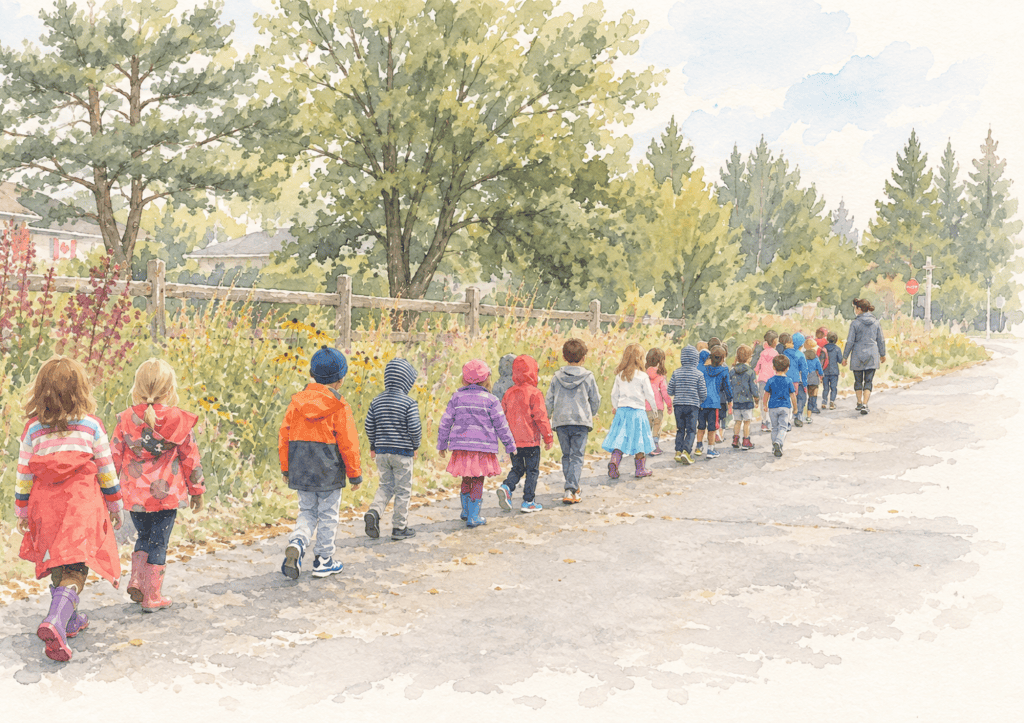
Before we went out, I gathered the students and set some parameters: this was not recess, and it was still learning time. We went out a different door than usual, so the experience would feel different from the start. On our way outside, I grabbed The Listening Walk by Paul Showers at the last minute and crossed my fingers.
Once outside, I read the book and was surprised by how well the students were listening compared to inside the class. It was like they hung on every word. And when we came to the line, “On a listening walk, I do not talk,” they understood the assignment! I asked them what they thought we do on a listening walk, and they told me: “On a listening walk, I do not talk.” The rule was theirs after that, and they enforced it on each other.
Back in the circle, the students astonished me. They named the wind in the Rainbow Trees, a dog barking, a heavy door slamming, and chipmunks in the hedges along the fence. A student who heard a roofer’s hammer reported it as a woodpecker, and I did not correct him. You do not want to extinguish the sparkle. It was his interpretation of what he heard, and it was a starting point. Someone heard a plane overhead, and the class argued about whether a plane counts. After a listening walk, I do not assess whether their noticing is factual; the noticing helps me plan the next lessons.
I was lucky enough to take my students on amazing field trips to outdoor learning centres and a forest school, but you don’t need that to start. We were on our own grounds, and the students still picked up a whole world of sound.
Field Note
The robin is listening for its lunch
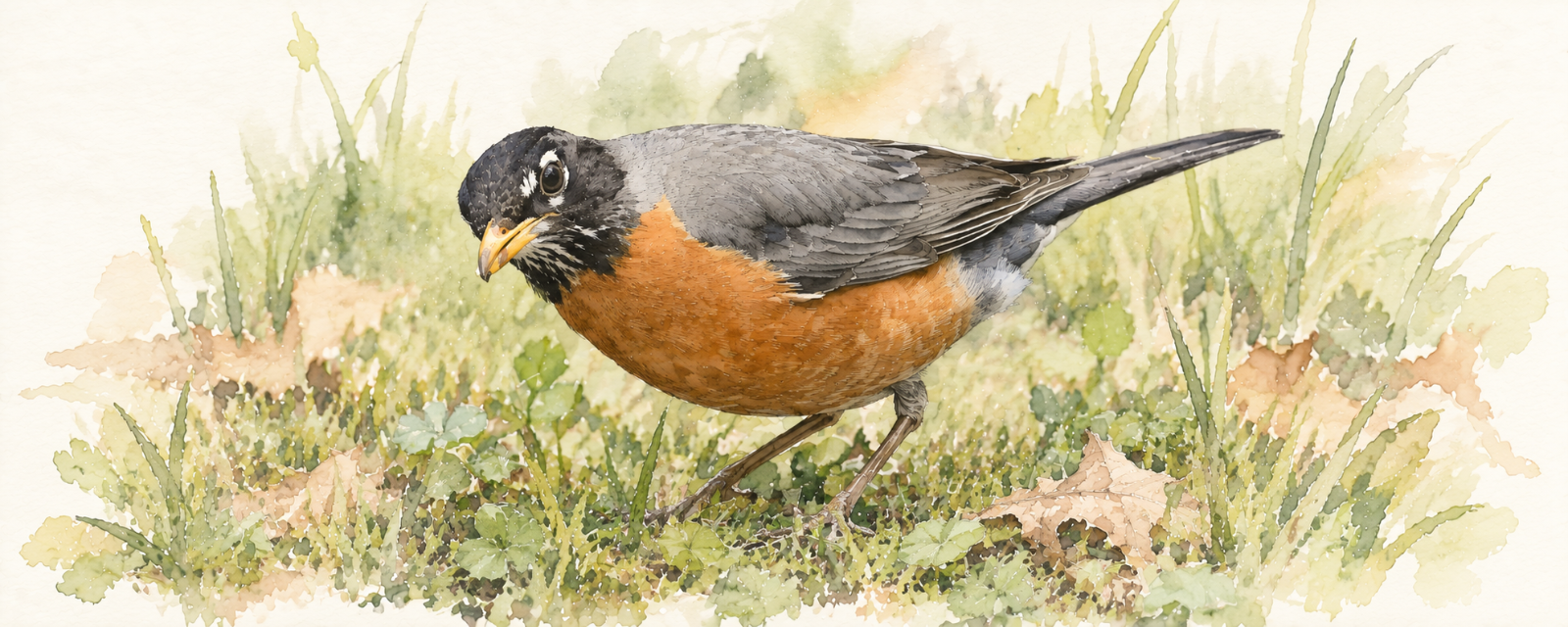
The most ordinary bird on the schoolyard, the American robin, hunts partly by ear. That cock of the head on the grass is not the bird looking sideways at the ground; it is the bird listening for a worm moving underground.
For years, people assumed robins found worms by sight, feel, or smell. Then two biologists at Queen’s University in Kingston and Carleton University in Ottawa put robins in a pen with buried mealworms and removed every cue but sound. The robins still found them, and when the researchers played white noise, the robins had a much harder time. They use their eyes as well, but no one had expected them to hear a worm at all.
Sources: Montgomerie & Weatherhead, “How robins find worms,” Animal Behaviour (1997) · British Columbia Field Ornithologists, “How do American Robins find earthworms?”
How do you run a listening walk?
Once outside, I gather the group and read Paul Showers’ The Listening Walk, or another book about quiet and listening, like We’re Going on a Bear Hunt or The Quiet Book. I invite the students to co-create the success criteria for a listening walk; they almost always get to “not talking” on their own. Then I give them the line to say back: “On a listening walk, I do not talk.”
We walk slowly, slower than feels natural. Every so often, I stop, hold up a hand, and we stand still and listen for about fifteen seconds. Standing still changes what you hear, because you stop making your own sounds.
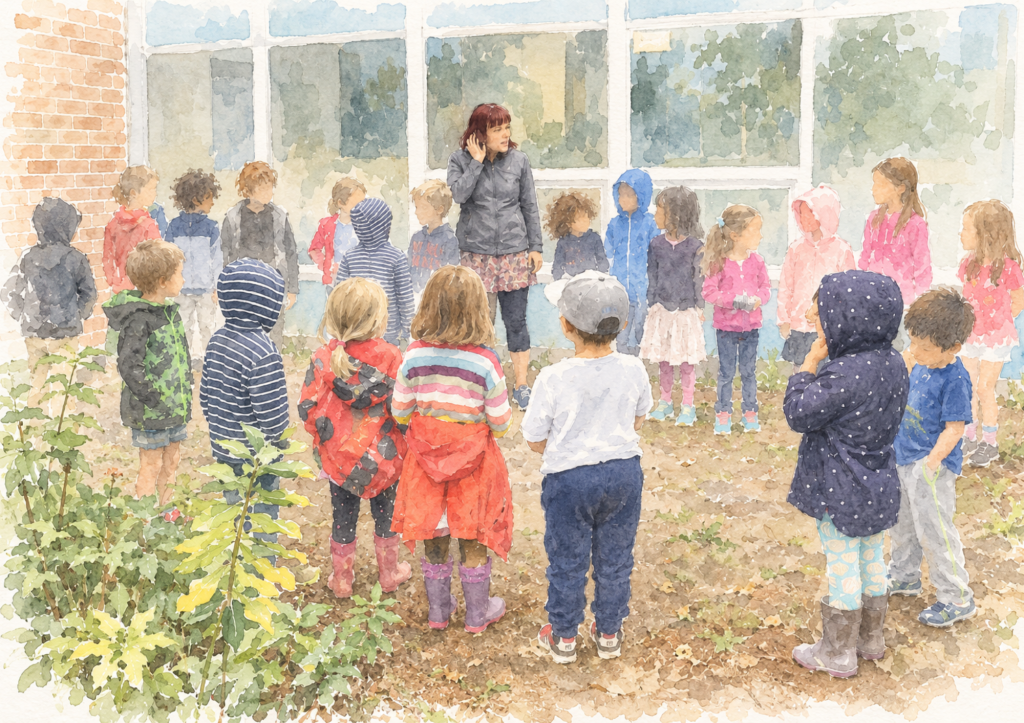
We meet back at the spot where we started. Everyone shares something they heard, and I write it all down where the class can see it. Then we sort the list and relate it back to what we are learning in class: which sounds came from living things, which came from machines, which came from the weather, or which tell us something about seasonal changes. We might even sort which were close and which were far. By the end, you have a class-built map of the sound world within a hundred metres of your classroom door.
The whole learning activity, the read-aloud suggestions, and a student journal page with space to draw are free in the Listening Walk Learning Activity Guide.
Can students hear the seasons change?
I was giving this provocation to a room of teachers at a workshop one October, out under the trees: “Listen. The forest will tell you something.” As I said it, a single leaf let go and drifted down in front of the group. I could not have planned it.
So the challenge I give a class later in the year, once they have a listening walk or two behind them, is this: what does a leaf sound like when it falls, and is it crunchier in November? Most of us have never listened for it. Or what about the sound of snow falling in winter, or raindrops on a puddle in spring?
What if it does not work?
Somebody will talk. These are students who are excited to be outside. When one interrupts, I acknowledge them and gesture that we will hear the story afterward. If half the class is talking, you have walked too long. Cut it short and go out again another day for less time.
If a student says they heard nothing, they may be uncomfortable with a question that has no right answer. Ask them what nothing sounded like.
If taking the class outside worries you, I have written about that in Taking Your Class Outside for the First Time.
Once your class can do this, a sit spot is the natural next step: What Is a Sit Spot?. The places where you stopped to listen can become the first stops on a learning trail: What Is a Learning Trail?.
Questions teachers ask
What age is it for?
It works from kindergarten up. I have run the same walk with rooms full of adults.
Do I need a natural space?
No, and students in a paved yard next to a busy road have plenty to hear.
What do I need to bring?
You do not need anything for the walk itself. Everything else about taking a class outside is in What Do You Need to Take a Class Outside?
How is a listening walk different from a sit spot?
On a listening walk, the class keeps moving around the yard. At a sit spot, each student stays in one place. More on that is in What Is a Sit Spot?
Will my class hear more machines than nature?
Probably, the first time. An airplane usually comes before a bird. That is what a schoolyard sounds like, and it is data. Natural sounds come as students get better at listening.
How long should the whole lesson take?
The walk itself is about twenty minutes. With the read-aloud before and the sharing circle after, plan on one forty-minute block.


Leave a comment