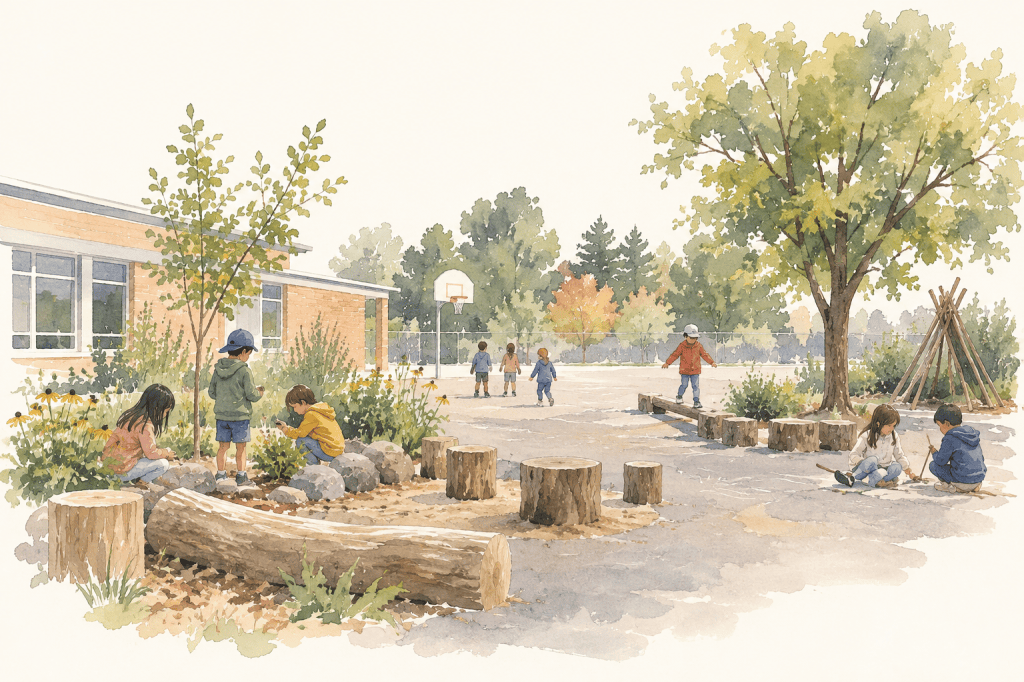
Place-based learning is teaching in, about, and from the place your students already learn and live: your schoolyard and the streets around it. You start by exploring what is local and connect the curriculum to it. Students learn what is actually outside their classroom window, and they keep exploring the same places until they truly know them. They can explore the schoolyard, nearby parks, or what I call nearby nature: large green spaces close to the school.
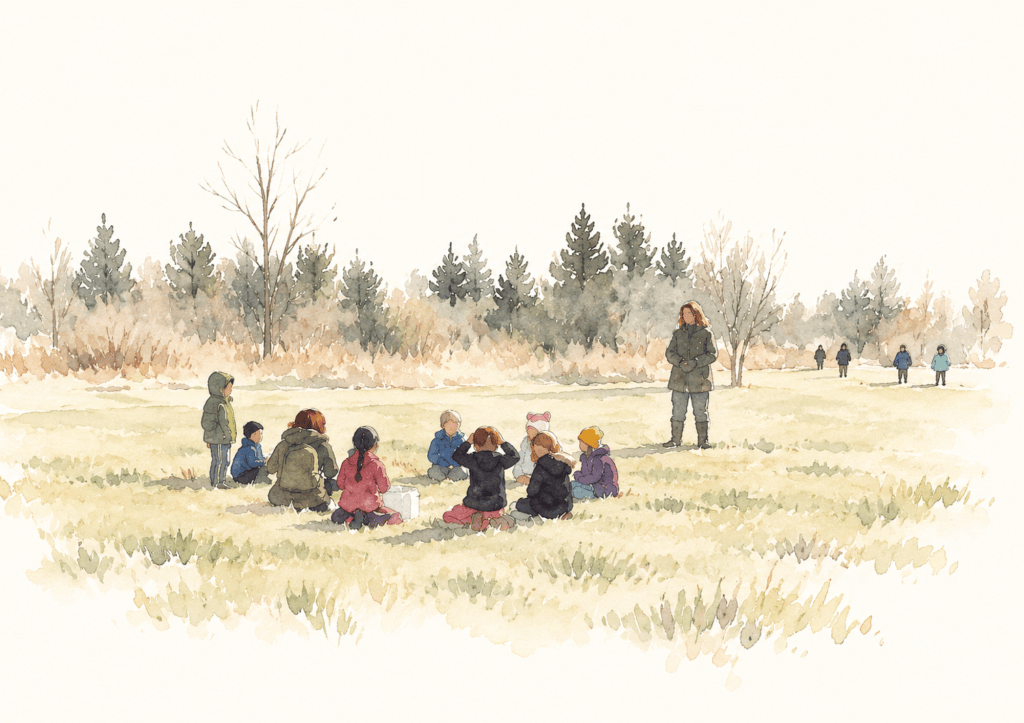
About a kilometre from my school, there was a forgotten patch of land. It had been a farm in the 1800s, though you had to know where to look to tell. It was scrubby, the kind of place a city planner would call vacant. At one point it was even considered for the new LRT trainyards.
We went there out of necessity. We did not have the budget for a whole year of field trips to a local conservation area, so we saved our money for winter, when we wanted shelter and a bathroom, and needed somewhere free for fall and spring. Next to the forests at the conservation area, the patch looked like nothing special. I wondered whether it could be as magical, and I was sure my students would be less than inspired.
I was wrong. Together, over many weeks, we walked the area, mapped it, and the students found its special places and named them. On one of our early visits, a neighbour ran out of her yard toward us. We had permission to be there, but we guessed she was upset that children were making noise. It was the opposite. She asked if she could take pictures of the students playing and learning. We said no, of course. Then she explained: this “vacant” land was often threatened with development.
When the students learned the place could be lost, they were so upset. Back at school, we wrote letters to their city councillor. One letter was simple and straightforward: “I love the forest.” The land is still there. Dog walkers and neighbours use it, and the plants and animals do too. Nothing has been built on the land (yet). The part I never saw coming is that students started taking their families there. They had no idea there was green space so close to home.
Where does place-based learning come from?
The researcher most associated with place-based education is David Sobel. One of my favourite quotes comes from his book Beyond Ecophobia:
I have watched that happen in students year after year.
What does it look like when a class starts?
When my classes visited local spaces (our schoolyard and the green space close to the school), they began naming the same trees each time without any prompting from me: the Spaghetti Trees, the baby tree, the Rainbow Trees. After that, the seasons happened to their trees and the water cycle happened in their puddle. They started asking who else uses this place and what lived here before us.
Field Note
The last monarch of the summer is different
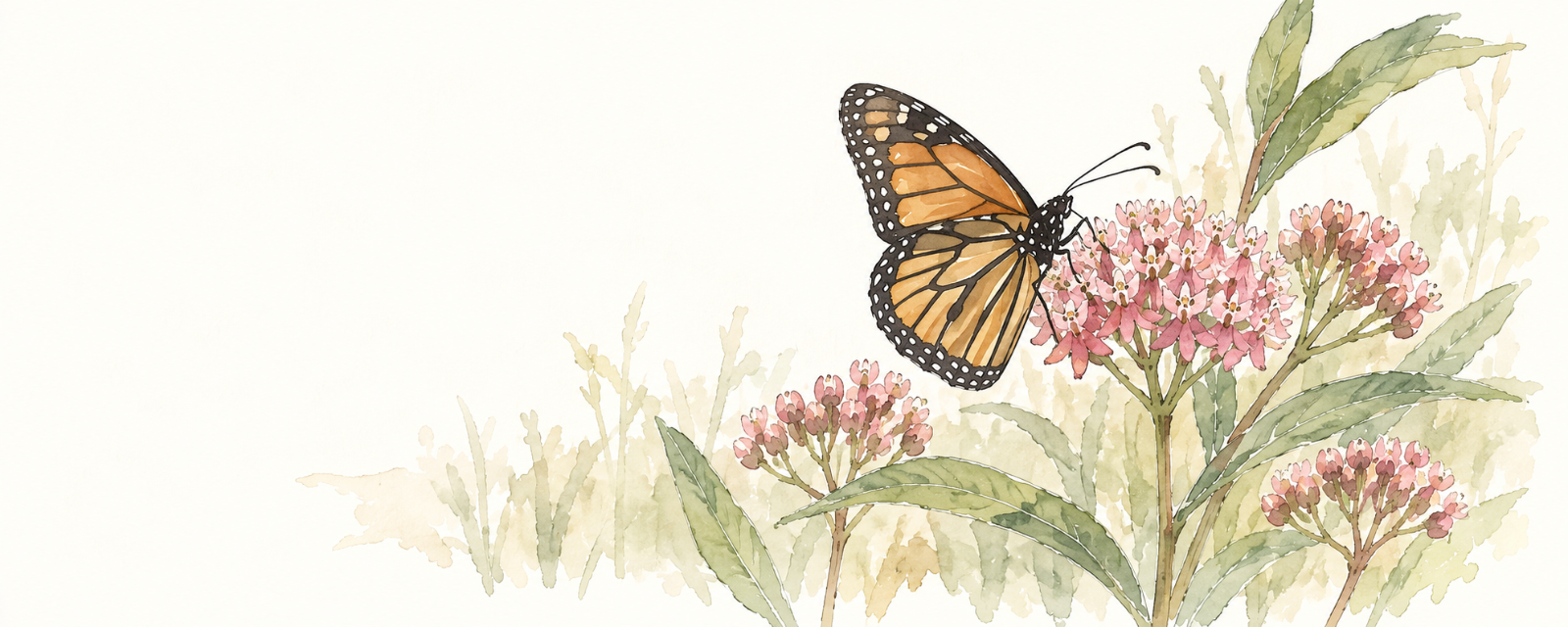
If milkweed grows in a corner of your yard and a monarch lays eggs on it in late summer, the caterpillars that hatch will eat nothing else. In southern Canada, monarchs go through two or three generations between June and September, and the last one is different from the others.
A summer monarch lives about a month. This late generation can live six to nine months, and instead of breeding right away, it flies more than 3,000 kilometres to a handful of oyamel fir forests in the mountains of central Mexico to spend the winter. The monarchs have never been there, and neither have their parents or grandparents, and scientists still cannot fully explain how they find their way.
Sources: Hinterland Who’s Who, Canadian Wildlife Federation, “Monarch Butterfly” · Parks Canada, Fort St. Joseph National Historic Site, “Monarch butterflies”
How long does it take before you notice anything?
It takes longer than one visit, and it is hard to pinpoint when students start noticing things on their own. The first visit is often so exciting. The rule of thumb is at least six visits to a green space, but I have found that ten is ideal. After about ten visits, in my experience, the teacher relaxes into the work and feels more confident. Call it self-efficacy: you finally believe you can run a lesson out there, and the students borrow that belief.
The moment might be a student mentioning that one little tree’s leaves turned before the bigger ones did, and you realize they have been keeping track without being asked. Or maybe a student asks a really good question. A tamarack tree stood in our nearby nature space. One day, a student asked, “If a pine tree has a pinecone, what do we call the cone on a tamarack tree?”
Where do you start?
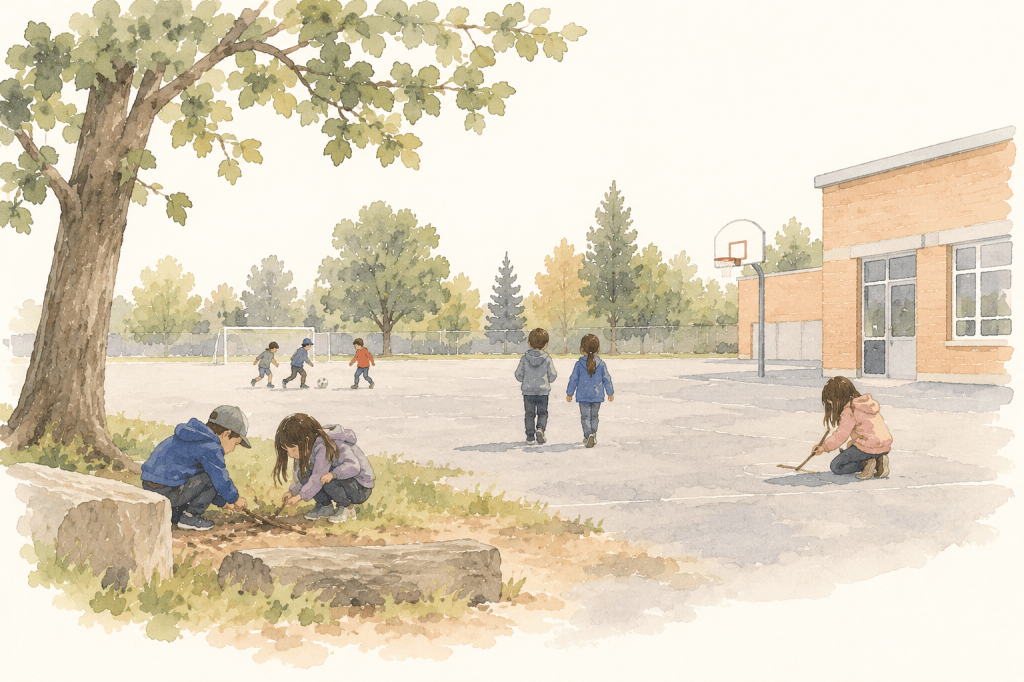
Pick one spot in your yard and gather there every time you go out. Write down what your students notice each time, because those notes are your evidence of the learning.
If you want one small thing to try, let the class name a landmark. Ask what you should call the place where you always gather, and take the vote seriously. Then add the name to a paper map of the schoolyard. I used to project a Google Map onto craft paper, trace the area around the school with a Sharpie, and add our special named places as we went. Other years, I did the same but used a painter’s drop cloth. The bonus is that the drop cloth is waterproof.
Gather enough of these special named places, and you have the beginnings of a guided learning trail: a set of fixed stops on your own ground that your class returns to all year. What Is a Learning Trail? explains how I co-created a route the class could walk on its own, stop by stop.
The free Listening Walk is an easy first outing for a class getting to know its ground: get the free Listening Walk learning activity guide.
If you are new to all of this, start with the big picture in Outdoor Learning on a Schoolyard: The Big Idea, then come back here.
Questions teachers ask
Do I need a special green space?
No. An ordinary schoolyard works, including one that is mostly asphalt. What your students learn about the place matters more than what grows there. Some of my favourite outdoor moments, as a child and as a teacher, came from putting names to wildflowers: buttercups, cow vetch, and chicory.
Does this mean leaving school property?
You do not have to. My own story here happened off-site, but you can do place-based learning on your own yard. If you do want to take a class off property, What Do You Need to Take a Class Outside? covers the permission and headcount side.
How is it different from a field trip?
On a field trip, you visit a place once, and then it is over. Place-based learning means students explore a local site through the year and build on what they saw last time. To build that habit, see What Is a Sit Spot?
How is place-based learning different from project-based learning?
Project-based learning centres on a driving question or final product and can happen anywhere, including indoors. Place-based learning always starts from a real local site. The two often overlap, and many good projects are also place-based.
How does it fit the curriculum?
Place-based learning is not an extra subject to fit in. You teach mapping, seasonal change, habitats, measurement, and descriptive writing using places your students already know.
Does place-based learning work in a second language?
Yes, and in my experience, it is one of the best settings for learning an additional language. In FSL, creating opportunities for spontaneous interaction is an important part of the curriculum, and I have never found a better generator of them than a schoolyard. A student who has just found a monarch caterpillar on the milkweed is not rehearsing a dialogue; she needs the words for antennae, legs, for “it is eating,” right now, and she will reach for whatever French she has to get them. Vocabulary that arrives attached to something a student found herself is vocabulary that stays.


Leave a comment