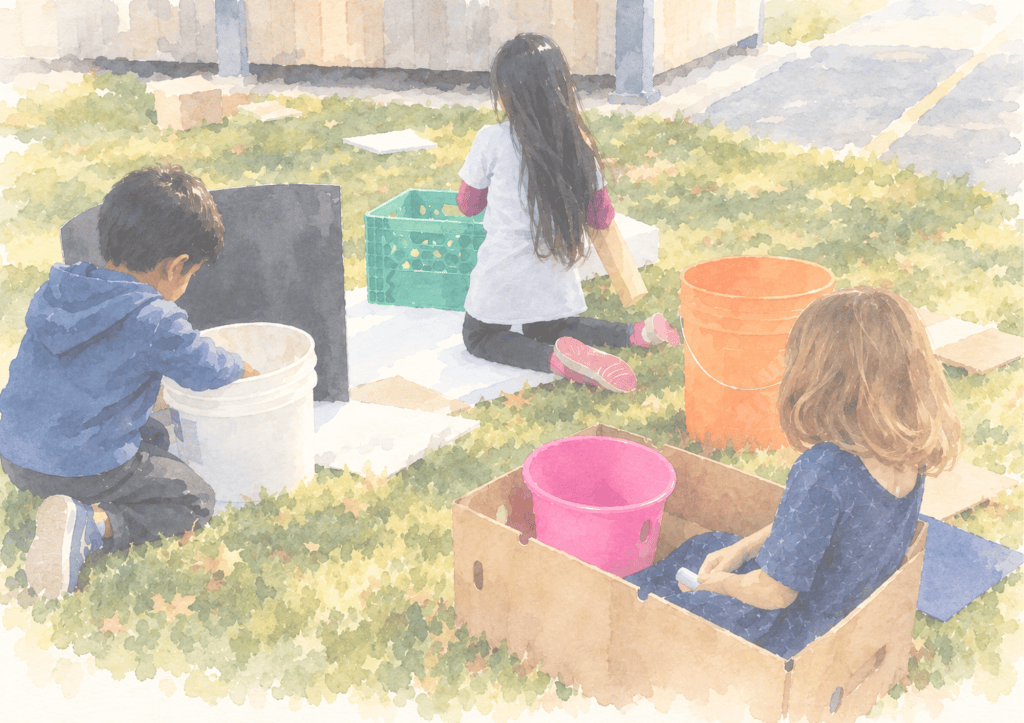
Experiential learning is an approach in which knowledge comes from experience itself. Students do something real, reflect on what happened, pull an idea from it, and build on it next time. A grade one class that builds with loose parts has had one experience building outside; it becomes experiential learning when the students work out what their builds showed them about structures, and their next build changes because of it. The reflection afterward turns it into an idea the student can name and use again. Without the reflection, a snowshoe walk is a lovely morning. With it, the walk becomes the lesson.
What are the four stages of the experiential learning cycle?
David Kolb published the four-stage cycle in 1984, in Experiential Learning: Experience as the Source of Learning and Development.
- Concrete experience. You do the thing.
- Reflective observation. You think back over what happened.
- Abstract conceptualization. You draw an idea out of it.
- Active experimentation. You test that idea the next time.
It is easy to stop after the first stage. But outside of that, it’s concrete experience and nothing else. To be completely transparent, if I ever caught flak from another teacher, it was because they saw my class having fun and didn’t appreciate the “work” they were doing. My students finish the cycle when they come back to it and work out what they would do differently. In my classroom, that became a ritual: the Story of the Day. During our closing circle, I would ask students to share a moment.
Back inside the school, usually the next day, I would invite students to write or draw something about the previous outdoor learning session. Together, we would write the “story of the day”. Afterward, students would write their own versions, adding details, using our newly acquired French vocabulary, and trying a new writing style.
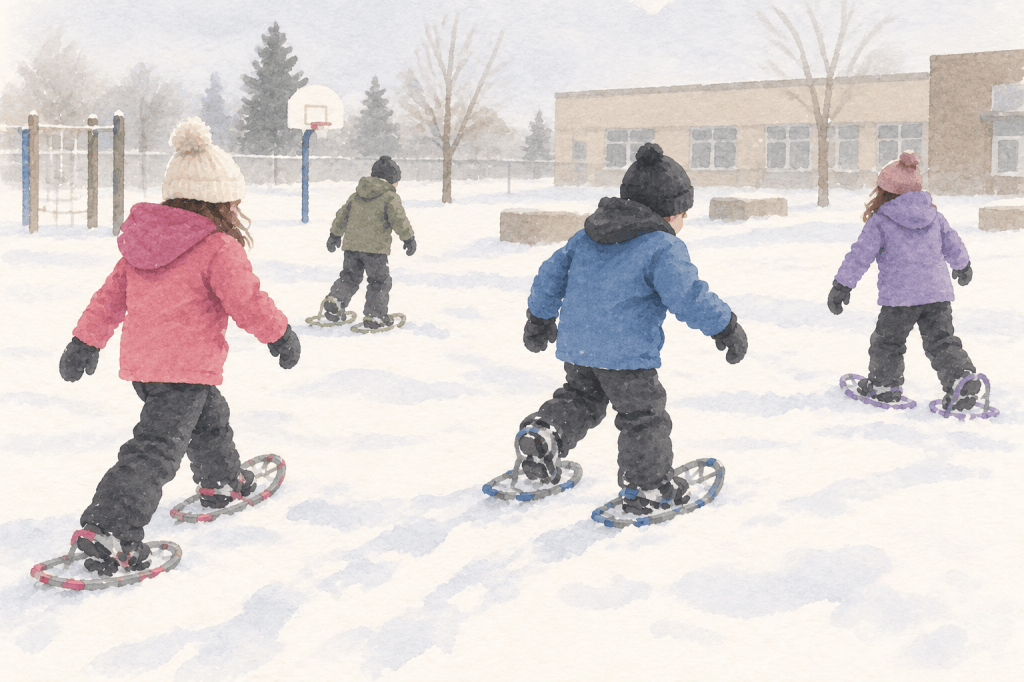
One winter day, when we went snowshoeing, I asked my grade three student to explain to me how to snowshoe. They needed to tell me explicitly, step by step, exactly how to walk in them. I did precisely what they said, including the parts that landed me in the snow. We refined the instructions until Madame got from point A to point B on the yard. Back in class, they wrote the procedure. The students produced some stellar procedural writing, because every first, next, then, and finally had a fresh memory attached to it.
Field Note
The animal that wore snowshoes first
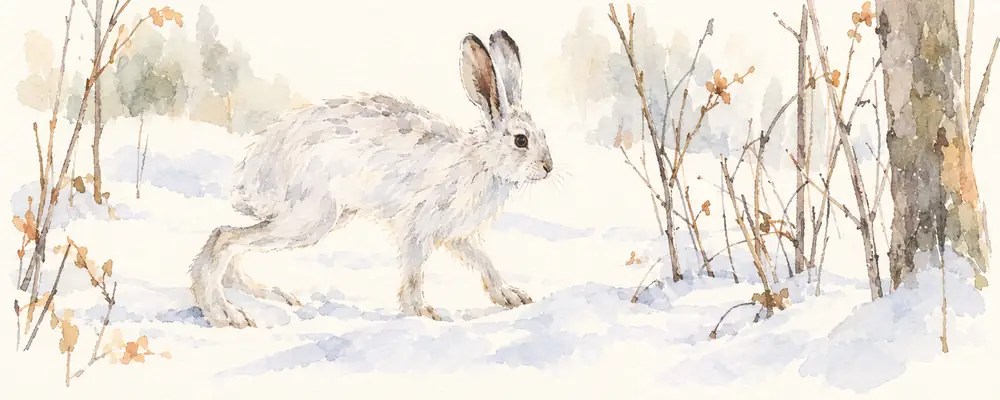
The snowshoe hare lives in every province and territory in Canada, and it wears its snowshoes on its body. Its hind feet are big and thickly furred underneath, and in soft snow it spreads its four long toes wide so each foot becomes wider still. Your students worked out the same idea on the yard, one careful step at a time.
On those feet a hare can cover three metres in one bound and reach 45 kilometres an hour. Its coat goes from grey-brown to almost pure white each winter, and the change is set off by the shortening days, not by the snow. In a year when the snow comes late, the hare turns white anyway and sits in plain sight on brown ground.
Sources: Hinterland Who’s Who, Snowshoe Hare · Canadian Wildlife Federation, Snowshoe Hare
Why is experiential learning Digging Deeper work?
In gradual release of responsibility, a teacher moves from I do to we do to you do, and Digging Deeper is the you-do end. Students pose the problem, plan the build, run the test, and lead the reflection. Running a whole program this way is harder than running one lesson. Instead of supplying the experience, you debrief each one and make sure students use what they found out last time. I write more about that stage in Digging Deeper: Student-Led Outdoor Learning.
How do you start experiential learning in one lesson?
Take a lesson you would normally explain first, and reverse the order.
- Let the class attempt the thing with what they already know.
- Teach into what they can’t do yet.
- Finish with a few minutes on what we just learned, and write down what they say.
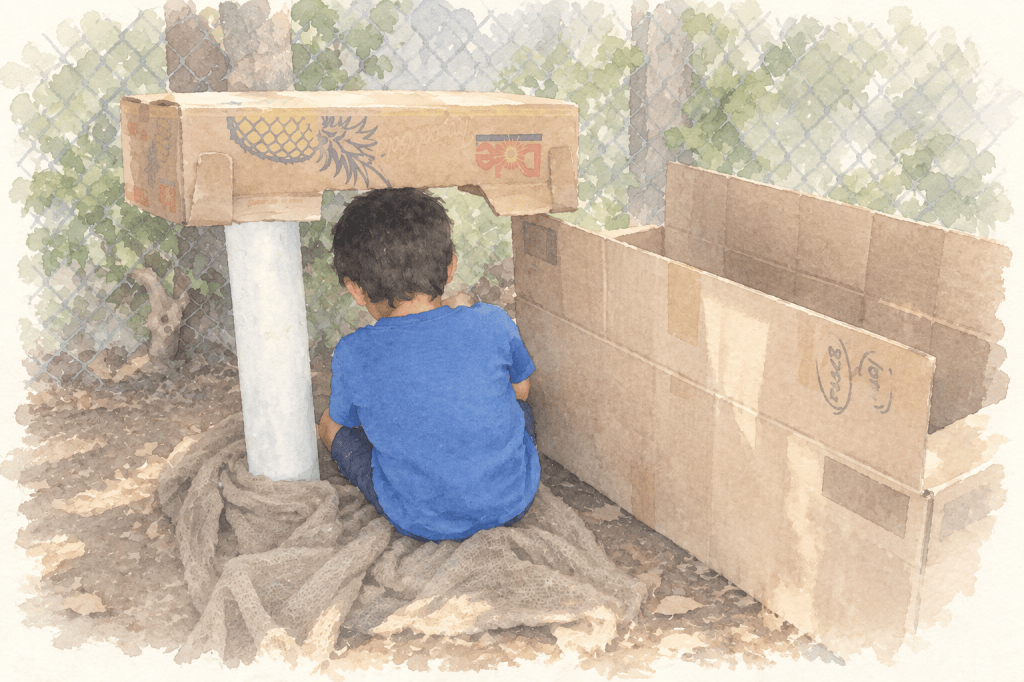
I always found the grade one energy unit a bit abstract for students. One year I set up a lot of hands-on activities in class. They were engaged and participated, but when it came time to assess, they couldn’t tell me much about what they had learned. Then something happened quite by accident during our next loose parts play session. I had been gifted a book, What Do You Do With an Idea?, and I read it to my class outdoors. Then I had an idea! I invited my students to build an idea factory out of them on the yard. I told them I would come around and ask about the kinds of energy they were using in their factories. I watched, and I took notes on what they said as they experimented and rebuilt. I was blown away by the details and how they explained not only how their idea factory worked, but also which types of energy ran each part.
Does experiential learning take a long time?
Sometimes, yes. Building an idea factory took longer than a worksheet on types of energy would have. But it better allowed students to demonstrate their knowledge and understanding. You make that call lesson by lesson.
If you want a do-first lesson with the reflection already built in, the free Listening Walk is one: get the free Listening Walk learning activity guide. For where this sits among the other outdoor approaches, see Play-Based Learning Outdoors: What It Looks Like After Kindergarten and Outdoor Learning on a Schoolyard: The Big Idea.
Questions teachers ask
Isn’t all hands-on learning experiential?
No. Hands-on describes the activity only. Experiential covers the whole cycle, including the part where students say what they now know. If you ran out of time before that conversation, you ran a hands-on lesson.
Does experiential learning have to happen outside?
No. The cycle works in a classroom. Outside, students have more real things to do and more room to do them in.
How is this different from play-based learning?
They overlap outdoors. Play-based learning starts from students’ own self-directed play. Experiential learning is broader, and the experience can be one you assigned.
Does it cover the curriculum fast enough?
It does not need to cover everything. Pick the few expectations your students misunderstand every year and spend the experience there. Teach the rest the way you already do.
What does the teacher do during the experience?
You explain much less than you would inside. Resist the urge to jump in with the answer while students work, and save your questions for the closing conversation so you can build them from what you actually overheard.


Leave a comment