
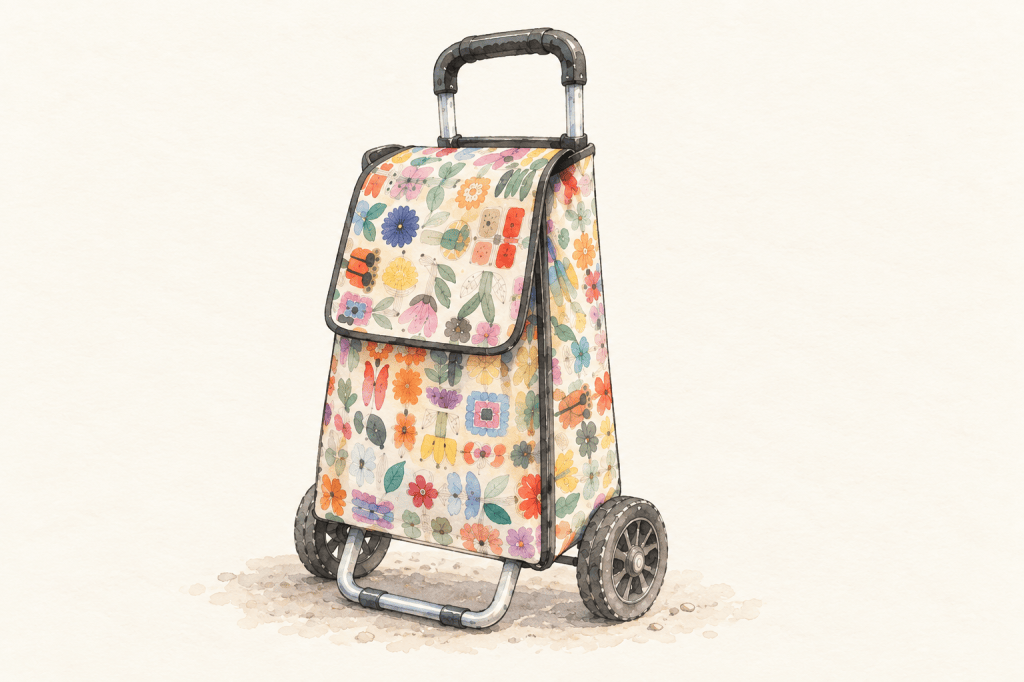
If my students lined up after recess and saw my shopping cart, they knew we were staying outside to learn. Nobody had to announce it.
To take a class outside for learning, you need the OK from your administrator, a “home base”, a signal that means come back, something for the students to write on, and a first aid kit. Students and adults alike need to be dressed for the weather. Everything after that is comfort and equipment you add over time. The one thing that matters more than any single item is to be packed and ready to go ahead of time.
Why does being packed already matter?
Iffy weather used to stop me. I would look at a grey sky, think about my rain gear sitting at home, and find a reason to stay in. So now, I keep an extra set of clothing for all seasons in my class closet and a spare poncho in my shopping cart.
The cart is not really about equipment, because very little in it matters on its own. I rarely use all of the items. It sits there, ready as backup, to remove the small reasons to cancel.
What do you pack in the cart?
I have developed a system: a shopping cart I bring out no matter what, and a wagon with extra materials for deeper exploration.
The cart
- Blanket permission forms. Parents sign ours at the beginning of the year. They contain emergency contact and any allergy information. More on how far that lets you go below.
- Field guides. Bugs and Slugs, from the Lee Valley pocket field guides, is the one that gets used most, especially in spring when the insects take over the yard.
- A whistle. This is the emergency signal. To call everyone in, I hoot or howl, and the students know that a whistle means something is urgent.
- Extra mittens and hats. Little fingers get cold outdoors.
- A first aid kit.
- A walkie-talkie or a cell phone.
- A rain poncho for me, and a backup.
- Hand sanitizer. Students handle damp stones, bark, and invertebrates, then eat lunch.
- A refillable water container. The students bring their own plastic cups and fill up from it.
- A sit-upon. I have a class set for sit spots.
- Toilet paper.
Field Note
The thing under the flat stone is not a bug
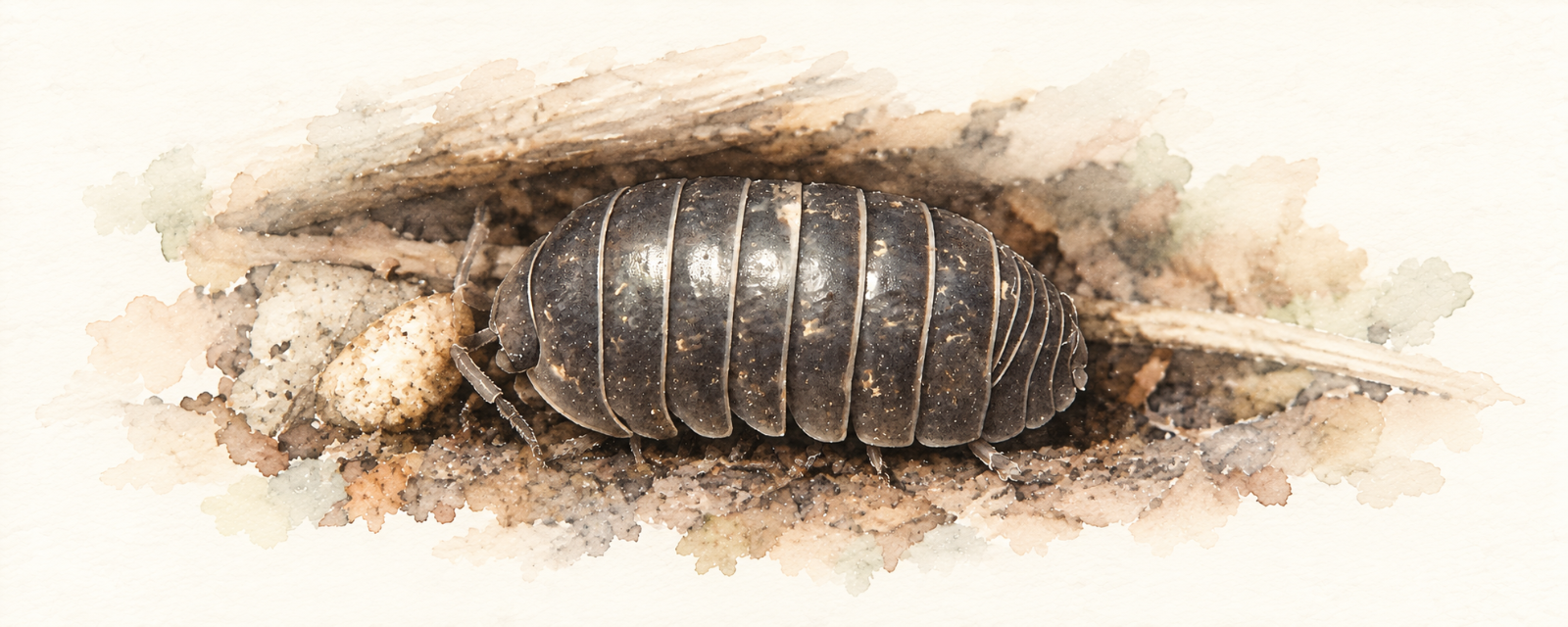
Turn over one of the flat stones on your yard and something grey will roll itself into a ball. Your students will call it a roly poly, or a potato bug. It is a crustacean, closer to a crab than a beetle, and its ancestors came over from Europe and have lived under boards and paving slabs here ever since. It breathes through gill-like plates that work only when they are damp, which is why you find it under things and why it does not last long on hot, dry pavement.
Put one in the divided container with the magnifier in the lid, let a student watch it open up again, and turn the stone back the way it was when you passed by.
Source: Dave Ingram, “What’s that Woodlouse?”, Island Nature
What do you keep in the wagon?
The wagon sits by the door to the outside, packed. Where it sits does more for us than most of what is in it.
- Buckets, one per student. They stack, and students use them for a variety of learning activities.
- Collecting tools. A set of containers collected over years: ice cube trays, plastic tubs, bread baskets. Any shape will do. Finding ones divided into compartments so a student can keep a variety of treasures separate is great. Some come with a magnifier built into the lid.
- Observation tools. Empty picture frames and hoops to focus noticing, paint chips for matching colours, and magnifying glasses for looking closely.
- Writing tools. A container of clipboards, pencils, and markers. Sidewalk chalk. During COVID, I added whiteboards and markers for word work, and I still use them as a great first learning-outside activity.
- Identification tools. Sets of published field guides, identification placemats, and class-made field guides to identify plants, animals, and rocks on the yard. I have these in both French and English.
- Tarps and ropes. One tarp lets students put backpacks and lunch kits down without them getting soggy, and others are for building shelters. Students use rope to tie a tarp into a shelter, and some days we just practise tying knots.
What should students wear?
Dressing for weather makes everything more fun. Wet feet end an outing fast. Boots that actually keep water out are important; after that, it is all about the layers. We can work through feeling cold by moving, but students feel damp in their bones.
Keep a bin of spare mitts, hats, and snow pants by the door. Most schools already have all of it in the lost and found, and the students who most need to get outside are often the ones who arrive without the gear.
When do you not go out?
I go out rain or shine, but there are times I have stayed inside:
- In November, when the class was not dressed in layers, and the damp was the kind that gets into everything.
- In January, when it was below the temperature our board sets, and that number is not a judgment call, so look yours up in September.
- In June, either because it was too hot or because there was a smoke advisory from the forest fires.
Cold on its own is almost never the reason. On a cold day, I keep the students moving, which usually means we take the longer walk or do something more physical, and nobody stands still long enough to get cold.
Can you take a class off the school grounds?
Check what your own board uses, because the wording varies. Generally, a blanket permission form signed in September may cover visiting adjacent green spaces within a certain distance of the school. At all three schools I have worked in or consulted at, we never needed to cross a street or leave the block.
I give the office a manifest: who is with me, my cell phone number, and which part of the schoolyard or which adjacent park we are going to. I go out on the same day most weeks, so the office learned to expect me to be outside. When something came up spontaneously, we had a whiteboard in the office, and I wrote where we were heading as I passed by.
How do you keep a class safe and together outside?
- A boundary the students can see. On most yards, that is a fence line or the edge of the pavement.
- One signal means come back, and another means emergency. Mine are a hoot or a howl for the first and a whistle for the second, and they never get confused because they sound nothing alike. Any two sounds work as long as they are unmistakably different.
- A headcount at every stop, not only at the door.
- The office manifest, as above.
- Any educational assistant or support staff who works with your class, out on the yard with you.
- EpiPens and inhalers. A student who carries their own carries it outside as well, usually in a fanny pack. If a student does not carry their own, I take it in a small pack that stays on me and not in the cart or the wagon, because the cart gets put down.
- Knowing the yard schedule matters, because another class playing soccer on the same pavement can change your plans.
The longer conversation about permission and what to tell an administrator is in Outdoor Learning on a Schoolyard: The Big Idea.
Do you need all of this equipment to start?
You do not. On my first few outings, I took a first aid kit, a whistle, and a set of clipboards, and nothing went wrong. The rest accumulated over the years, mostly from recycling or donations.
Start with whatever fits in one bag. Then add the thing you wished you had on the walk, which is how every item on the list found its way into my cart. As your collection grows, invite the students to be in charge of bringing items back and forth.
The paperwork side of this- the letter home, the manifest I hand to the office, and the ten-minute conversation with a principal and a custodian- is written out as learning activity guides in the Getting Started Pack, along with the kit list as a checklist you can print. It is part of the Getting Started Pack.
Questions teachers ask about taking a class outside
What is the minimum you need to take a class outside?
A first aid kit, a signal that means come back, something for the students to write on, and footwear that keeps water out. A bag helps, because it means you aren’t assembling the kit the morning you want to use it.
Do you need a wagon?
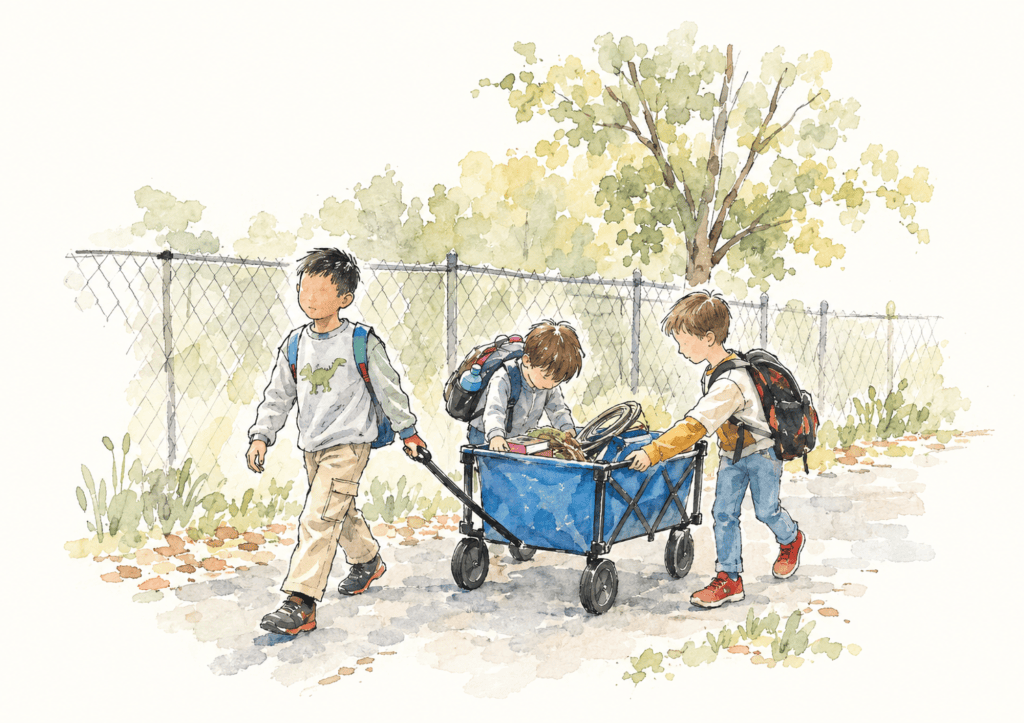
No, but you need somewhere to keep what you take out. My wagon did double duty as storage for my items and a visual reminder to take my students outside to learn.
Can you leave the school property?
Check with your administrator first. Review all relevant school board policies and procedures.
How cold is too cold?
Check your board’s policies and procedures. Our office staff would let us know if the temperature was too low or the air quality was too poor to go outside. The board sets the number, not me, and I look it up in September, so it is never a judgment call on the day.
What field guides are worth buying?
Buy what you’ll actually see in your yard rather than a whole-region guide. In Canada, Lee Valley carries a range in English and Broquet publishes in French. The University of Guelph Arboretum sells laminated single-topic identification sheets on a variety of plants and animals, including lichen and goldenrod. The sheets used to be English only, and they now come in English, French, and Anishinaabemowin.
What do you do about a student who wanders past the boundary?
I call everyone in with the hoot, not just the one student, so nobody is singled out at the fence. Then we walk the boundary together again before the next outing, and that student walks it beside me.
How much does an outdoor learning kit cost?
Very little, if you build it slowly. Most of my containers came from recycling, the spare gear came from the lost and found, and I bought the field guides one at a time. The first aid kit and the clipboards are the two things worth asking the school council to fund.


Leave a comment