A stage comes after the first few visits to the schoolyard, when educators are ready to move from what feels like a treat for students to something more teacher-y. It sounds like this: “We go outside, and it is lovely, but the pressure to cover the curriculum is real.”
Teaching outdoors doesn’t require a separate curriculum or add-on activities. Start by looking at what you are already teaching next week and move the parts that involve observing, sorting, measuring, or describing outside. And let the students’ questions guide your next steps.
What does teaching the curriculum outdoors actually mean?
Start with your long-range plan and the lessons you were already going to teach. Open next week’s page. Find the lessons that ask students to look closely, group things, count, or write down what they notice. Those are the easiest ones to take outside.
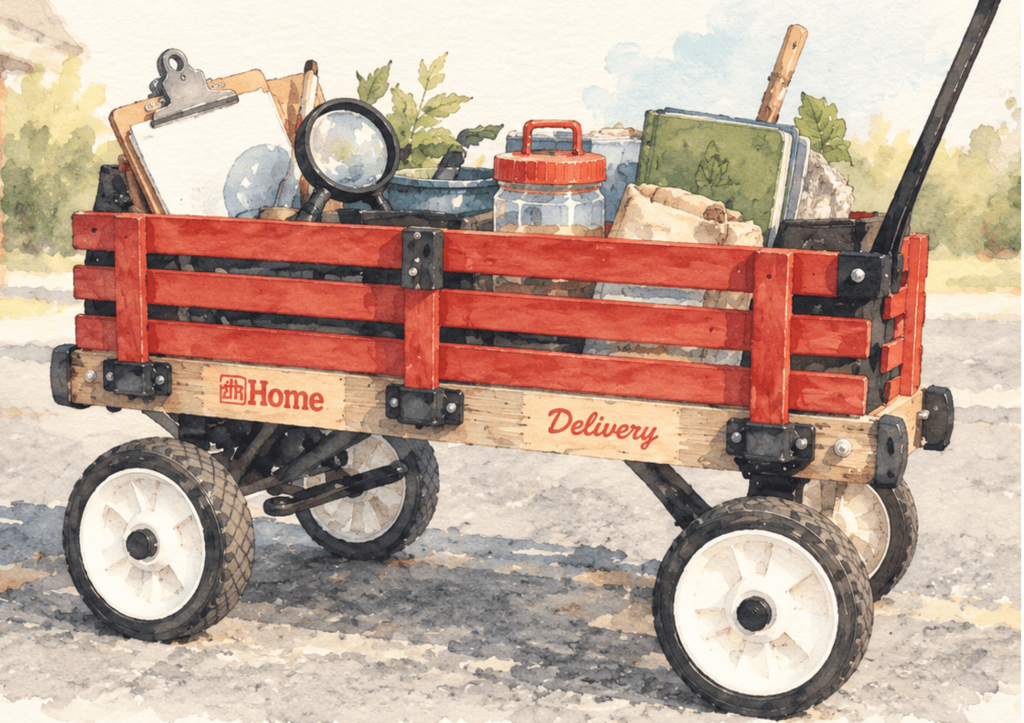
During COVID, I taught outside whenever I could, out of necessity; otherwise, the students were stuck sitting behind corrugated plastic dividers all day. What surprised me was how many of our indoor lessons my students and I could do out on the paved area in the back of the school. Even French dictée worked outside. After that, I stopped sorting lessons into indoor ones and outdoor ones. I asked myself how I could make each lesson work outside.
Which lessons work outside?
Most of the ones that require looking, sorting, measuring, or describing:
| Subject | A lesson you already teach | Outside, it becomes |
|---|---|---|
| Math | Sorting and patterning | Sorting leaves, seeds, and stones by attributes |
| Language | Descriptive writing | Describing the characteristics of a tree, the shapes of clouds, the sounds on the yard, etc. |
| Science | Observing seasonal change | Watching the geese fly overhead (south means it is fall and north means spring is coming) or squirrels gather items for winter |
| Social studies | Mapping | Mapping the built and natural features in the yard, then adding layers on different days: special places, colours, sounds, animals, and plants. |
With more regular and repeated outdoor learning, students start feeling more connected to the plants and animals they see on the yard and are ready to make some important observations. A student who has watched one bird all winter wants its name: nuthatch, cardinal, goldfinch, pileated woodpecker. My French Immersion students built rich vocabulary this way, and the same holds true for multi-language learners in other programs. Students hold on to a new word when they have watched the thing it names, on ground they have come to care about.
Field Note
The bird that reads the tree upside down
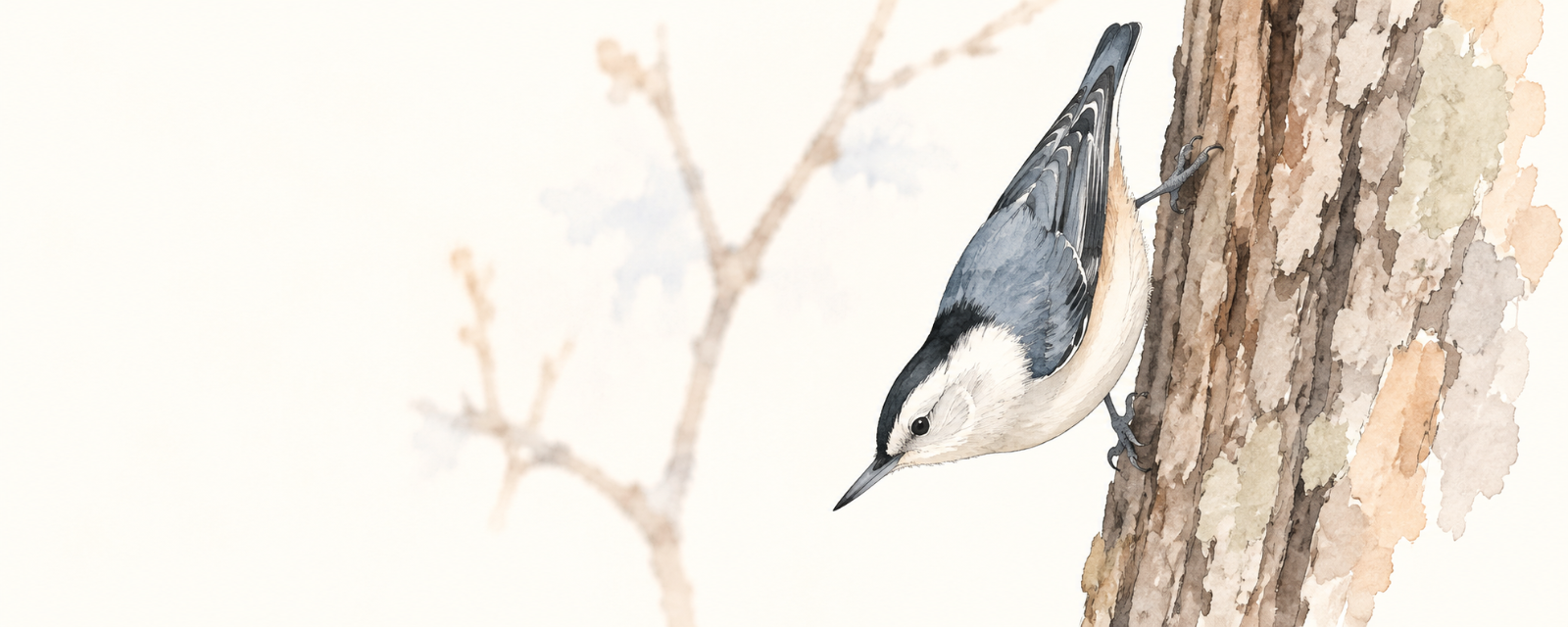
Watch a tree trunk in winter, and you may see a small grey-and-white bird walking straight down it, head first, while the woodpeckers only ever climb up. That is a white-breasted nuthatch, and going down face-first is its whole trick.
Head-down, it spots food the up-only birds walk right past: insects and eggs tucked into the top edges of the bark, and seeds it wedged there itself to pry open later. It is working the same bark as the woodpeckers, just reading it from the other direction.
Sources: Nature Canada · Cornell Lab of Ornithology
How do we take the learning further?
The best outdoor learning starts with a student’s question.
One spring, we found squirrel middens (large mounds of discarded pinecone scales and cores) at the base of a tree, and they caught my students’ attention in September. In November, they were convinced they found an enormous bird’s nest up in its branches (it was a squirrel drey). The questions kept coming, and so did the learning.
To assess student learning in science, I bring a clipboard outside. I check off each science expectation as students show me they understand them. I leave lots of room to note observations and record conversations too. When a student brings me a question, I answer with a question of my own, drawn from the curriculum, and I listen to what comes back. The students lead where the learning goes next. My job is to know the curriculum well enough to recognize when they know it too.
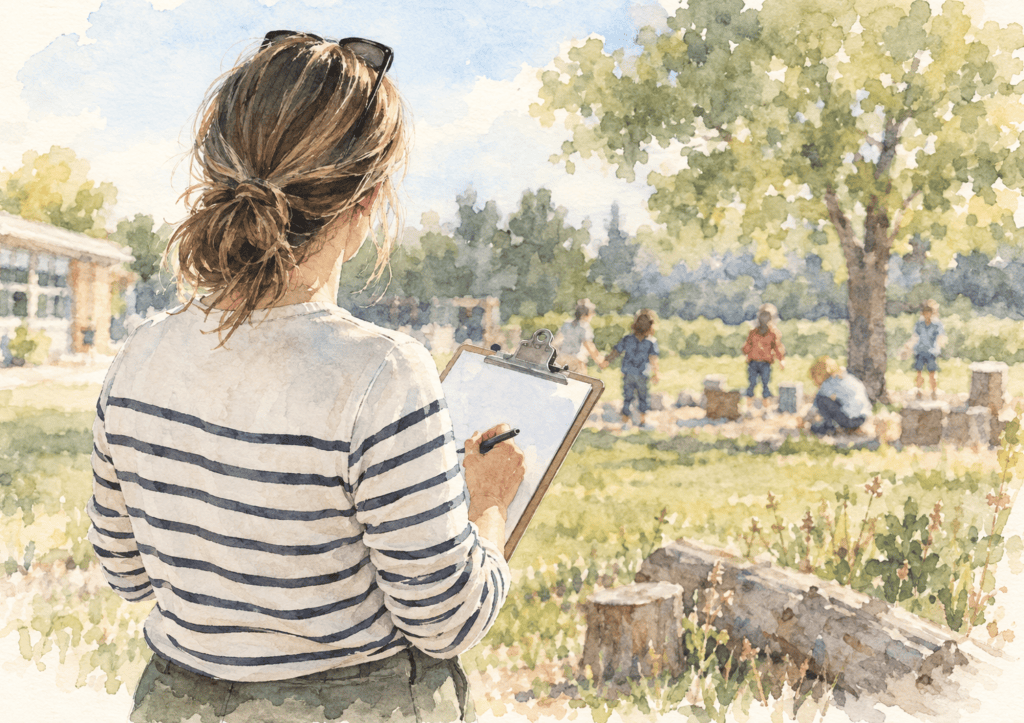
This process, inquiry-based learning, is already in the curriculum. For more about inquiry, read What Is Environmental Inquiry? If you are trying inquiry for the first time, this is the part I wish someone had told me: you assess the same curriculum expectations either way. You just stop deciding the order in which students will meet them.
Know your limits
Some weeks, learning outside will not fit. Schools are busy places, and the timetable is sometimes simply full. That is fine. If you miss a week, try again. Your students will not lose the habit over one missed week, and neither will you.
If you want one small thing to try: open next week’s plan and find a single lesson that includes observing, sorting, measuring, or describing. Ask whether twenty minutes of it could happen outdoors instead of indoors. Go outside and then let the questions flow!
To see where all of this fits in the bigger picture, start with Outdoor Learning on a Schoolyard: The Big Idea. When the routine is solid, and colleagues start asking how you do it, that is Digging Deeper: Student-Led Outdoor Learning.
Questions teachers ask
How often should we be going out?
There is no target number. A regular slot once a week, one your students can predict and tied to something you are teaching, does more than a daily walk with no goal.
Is it worth it in winter?
Winter is the best season for observation. Tracks, ice, bare branches, visible breath, and a feeder full of chickadees and nuthatches. Shorten the outing when it is cold, stick to activities that keep students moving, and go. It is my favourite time of year for outdoor learning.
How do I assess work that happens outside?
Assess it the same way you assess anything: what students say, what they do, what they produce. A clipboard and a class list go a long way. Assessment tools built for outdoor learning are coming to the store this fall.
What if a lesson flops out there?
Then it flops, like lessons sometimes do inside, and nobody suggests giving up the classroom over it. Work out what happened: too long, too short, wrong task for the day. Keep the slot in your week and change the activity.
Do I need a forest or an outdoor classroom for this?
No. This is written for a regular class on a regular schoolyard, pavement, and a few trees included. If you haven’t been outside yet, start with Taking Your Class Outside for the First Time.


Leave a comment