
The first time I took a class outside to learn, I overplanned it the way I overplanned the first week of school. What I actually needed could have fit on an index card.
To take your class outside for the first time, you need about twenty minutes, a spot to gather, a couple of clear routines and guidelines about exploring the yard, and a signal that means, “Come back.”
How long should the first outing be?
Keep it to about twenty minutes, door to door. That is enough time to run one real routine from start to finish, and you do not need to attempt a whole outdoor unit or a standing Forest Friday to begin. Twenty minutes, I promise.
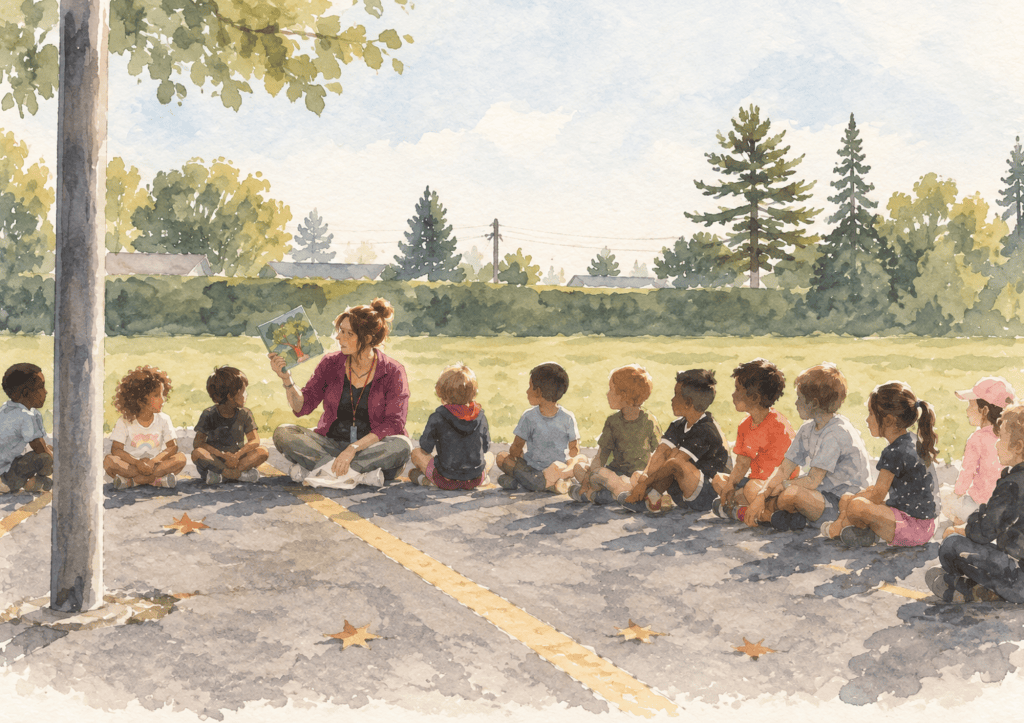
How do you keep it from turning into recess?
Shared expectations
Students know the yard as the place they run and shout, and they expect recess the second they are out the door. So the day before we go out, I say it plainly: this is not recess, and it is still learning time. I ask students to share what they like to do at recess, like manhunt, the play structure, or soccer, and then I invite them to put those activities in their pocket, figuratively, until recess.
Forest jewel necklaces
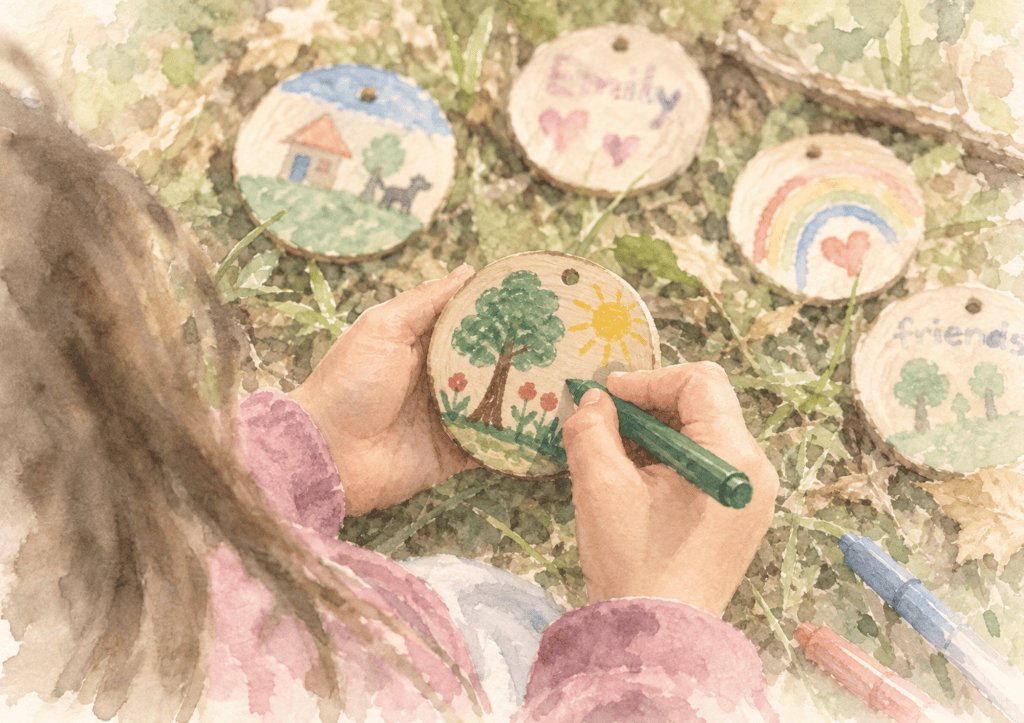
We pre-make necklaces, a bijou de la forêt (a forest jewel): a wood cookie the width of a golf ball. A colleague of mine cut the disks from an apple branch, with a hole drilled through them, and we added a jute cord. Craft stores and the dollar store sell wood cookies too. Students write their names and decorate their forest jewel with colourful Sharpies until the ink shines like a jewel.
On the day we go outside, before we leave the class, we have a short ceremony where I place the necklace around each student’s neck and say, “Now you are a nature child, and you are going to go out and discover amazing things.” Somehow, the ceremony of putting on the necklaces changes the outing for the better.
The door
We leave by a door we never use for recess. It changes their perspective enough before we have taken ten steps. Then we gather at our meeting spot and review the guidelines again, co-creating where possible.
Field Note
The bird that has your whole yard memorized
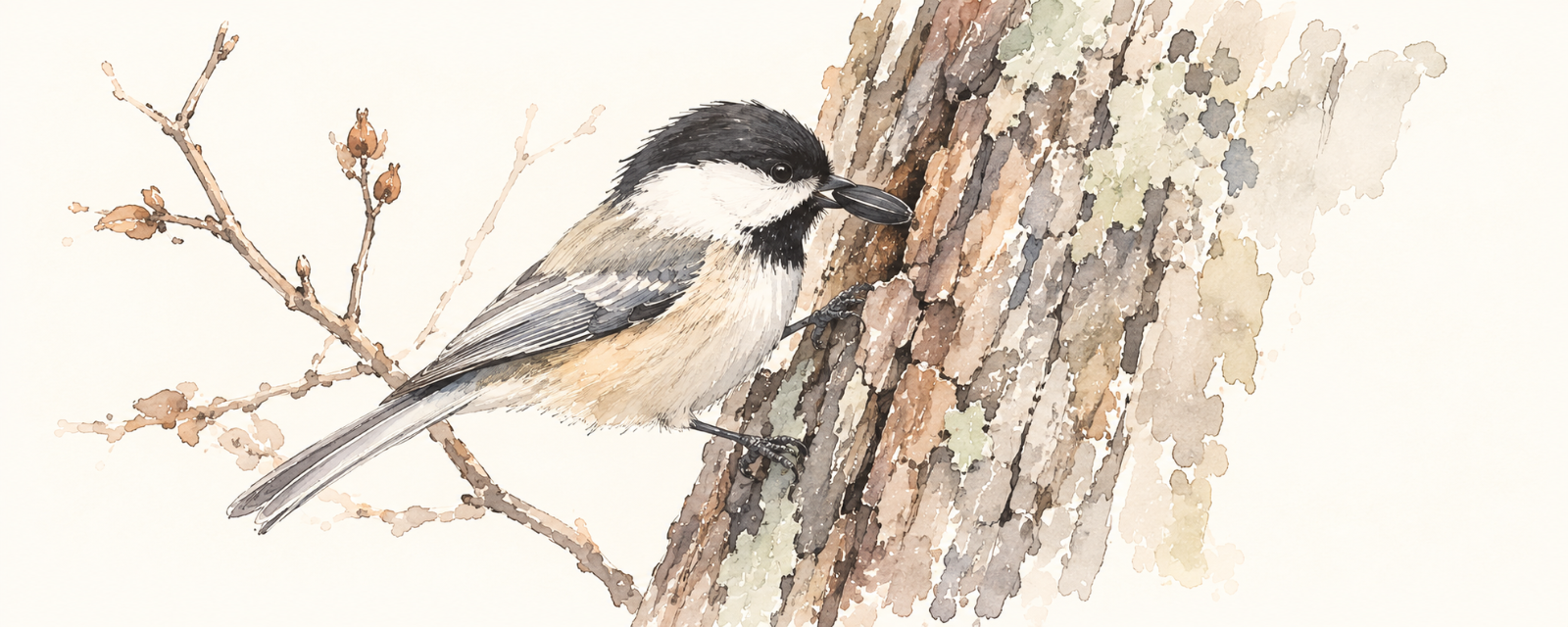
Watch the fence line in fall, and you will probably see a black-capped chickadee working the branches, hiding food as it goes. A single chickadee can stash hundreds of seeds in a day, one at a time, tucked into bark and crevices all over the yard. Come back a day later, and it finds them again with almost perfect accuracy.
It even remembers which hiding spots it has already emptied, and can hold that map in its head for weeks. An animal in your schoolyard knows the place better than anyone in the building.
Where should the class gather?
Pick your gathering spot before you go out. Once outside, some students will sprint to it, and others will stay glued to you, and both are fine on day one. What matters is that the group has a home base.
Agree on a signal that means gather back. Mine was a howl, because my class was the wolf pack. Other educators I have worked with hoot like owls, or call like a blue jay. I learned the owls-and-wolves version from Petra, my first Forest School collaborator, on a day when two classes shared one site and needed two different calls. Boundaries, signals and the rest of the practical setup are in What Do You Need to Take a Class Outside?.
What should you actually do out there?
Do something you would have done inside anyway. I often start the year with read-alouds on the grass while we build our routines. The first few outings are for teaching the class how to be outside together, and a nature lesson can come later.
The routines I use every session are in the Getting Started Pack: finding and naming a home base, teaching the gather-back signal before you need it, the forest jewels, what goes in the wagon, the letter home, and a whole first session laid out start to finish. If you want a ready-made first outing, start with What Is a Listening Walk? and take the free Listening Walk Learning Activity Guide. The pack arrives this fall; subscribe on the Free page and I will let you know.
What if the first time goes badly?
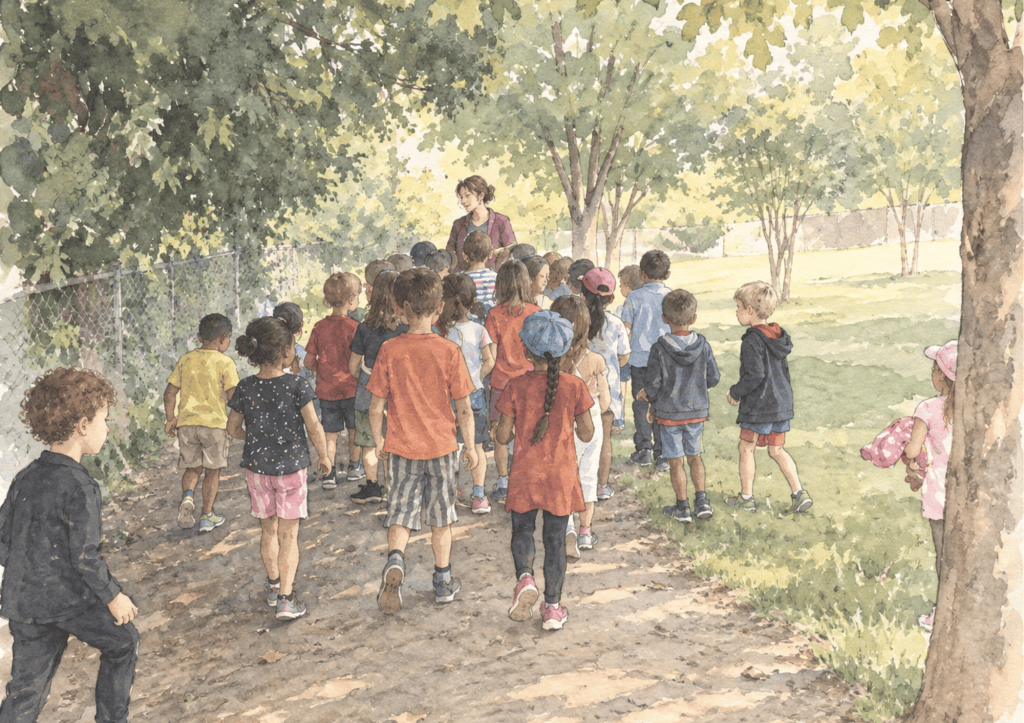
Some of it will go sideways. The first time I let a class explore the yard on their own, most of them were naturals. A few were not. Some froze or would not get their hands dirty, and a couple went straight to roughhousing. They weren’t being difficult; they just didn’t yet know how to be curious outside. For others, the freedom and ambiguity of some tasks made them uncomfortable. The next time out, I modelled it. I showed them what noticing looked like before I asked them to do it, and I gave the ones who needed it more direction and fewer choices.
After a few times out, the class settles into the routine, and you spend less time managing it. That is also when you start to see a different side of your students. I never realized we were only seeing part of many students’ personalities in the classroom. Outside, students who are reluctant to put up a hand seem to come alive, and some turn out to know a great deal about nature that they never had a way to share.
What do you tell families?
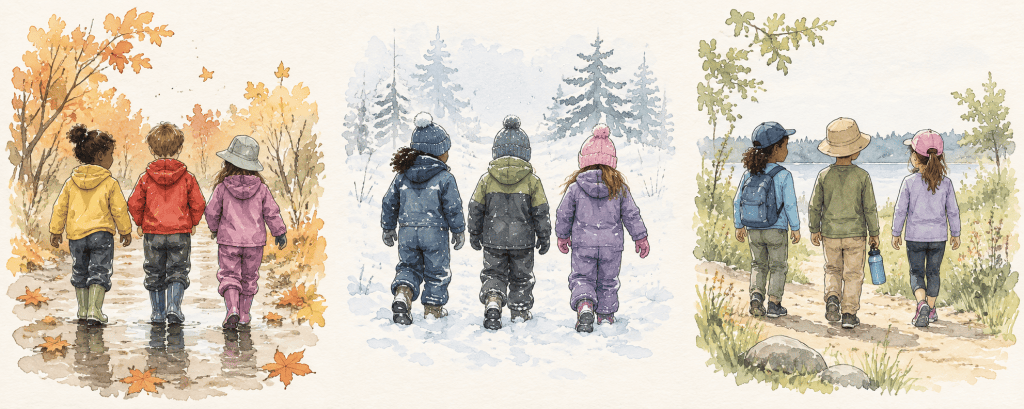
Send families a short email before you start, and include the day and time. I always invited families to send in a spare set of clothes, in case the puddles were too tempting or the day turned out more rain than shine. In my experience, most families are glad to help out. I keep spare clothes so students can go outside comfortably in all kinds of weather.
Questions teachers ask
Do I need parent permission to use the schoolyard?
On your own school grounds, during class time, generally no. But every school has its own procedures and policies, so run it by your principal first.
What do I do about the student who refuses?
A student who refuses is telling you something, and it is usually not defiance. Give that student a defined job, like holding the clipboard or being the assistant. Let them come to it at their own pace before you ask for enthusiasm.
Do I need special training to do this?
No. Any certified teacher is qualified to take a class outside. The case for using the yard you already have is in Outdoor Learning on a Schoolyard: The Big Idea.
Should I wait for good weather the first time?
Pick an unremarkable day so weather is not one more thing to deal with on day one. What to wear and when to stay in is in What Do You Need to Take a Class Outside?.
How do I keep it going after the first time?
Go back to the same gathering spot each week. The simplest way I know to turn a one-off outing into something students expect is a weekly sit spot, and I wrote about that in What Is a Sit Spot?.


Leave a comment