
Generations ago, being outside was the default state of childhood. Nobody had to arrange it. It happened on the walk home, at the park, on the street. I remember roaming my neighbourhood for hours with my friends and coming home when the street lights came on. It did not depend on money, gear, or living on a “safe” block.
When I first started taking students outside, the work already felt important. We were seeing the first generation of bubble-wrapped kids experiencing a curated childhood. It feels more urgent now, as the iPad generation and the COVID babies enter elementary school.
For many of the students in front of you, the school day is the only time anyone can guarantee they will be outside. Some live on streets where no one can let them roam. Some are new to Canada (a Canadian winter is a hazard before it is a playground). Many spend the hours after school in care, in a car commuting, or in front of a screen. I see the effects in my classroom: less risk-taking in their learning, more unmet sensory needs, more dysregulation. Canadian researchers say the same in the 2015 Position Statement on Active Outdoor Play, renewed in 2025: access to active outdoor play, with its risks, is essential to healthy child development, and children are getting less of it.
I am grateful for the range of outdoor teaching and learning I got to take part in over those years: outdoor education centres, Forest School, conservation areas, local parks and green spaces. The forests were lovely. But after all of those years, the deepest learning I saw happened in the schoolyards students walked across every day.
That is the big idea behind this site. You do not need a forest, a bus, or a budget. You can start with your regular program, taught on your own schoolyard, week after week.
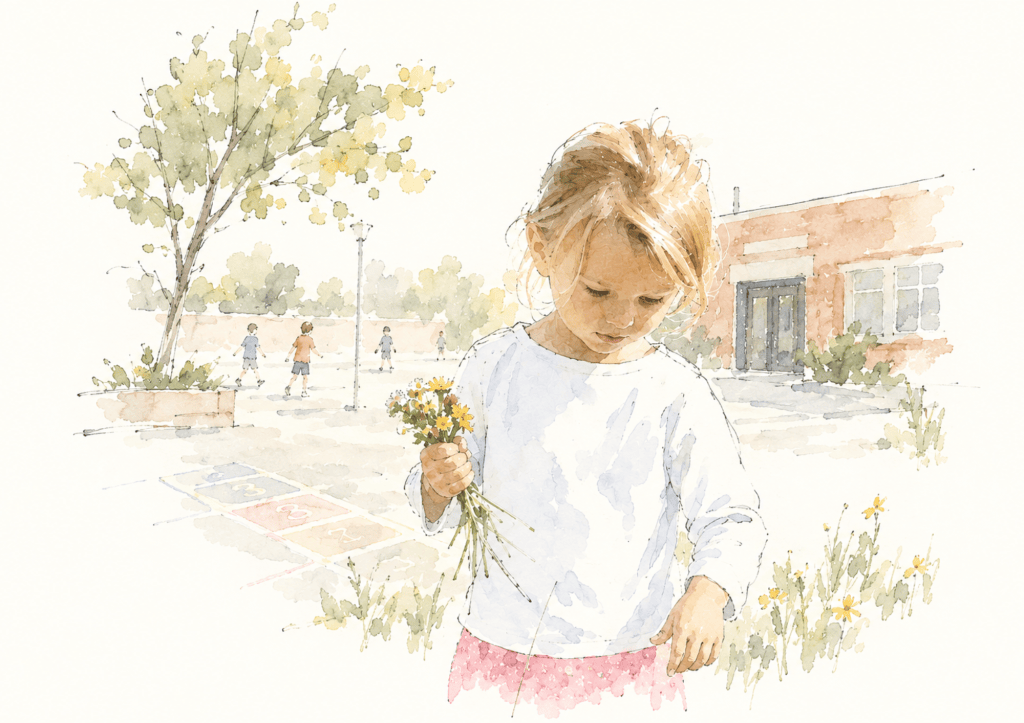
What is outdoor learning, and how is it different from forest school?
Outdoor learning is the umbrella term. It means teaching your curriculum outside instead of at a desk, wherever “outside” happens to be. Nature-based learning usually describes early-years and preschool settings. Forest school is a specific model, often run over many weeks in a woodland with a trained practitioner. Outdoor education often means field trips and camps. What I do sits under the big umbrella. It is also the version that needs the least: an ordinary schoolyard, a class of willing students, and a few low-cost items.
Do you need a forest?
No, and most days you do not need one. When teachers picture outdoor learning, they picture a visit to a learning centre in the forest, an expert facilitator dressed in Gorpcore, and activities planned in advance to keep students busy. Then come the logistics: booking a bus, chasing permission slips, and justifying how you will still cover the curriculum. It feels like a lot of pressure. It is also hard to keep up financially.
One spring, a colleague and I found ourselves with a little extra grant money, enough to take the students back to a conservation area we had been visiting over the winter. We asked the students whether we should go. They said, “No.” They wanted to keep learning outside, but on our own schoolyard and at a spot close to the school. We were a bit surprised, but it matched what I had read about place-based learning. Here were the students saying it plainly: this ordinary schoolyard was their special place.
Learning outside works by repetition, going back to the same spot at least six times. Go out to the same yard every week, and the students come to know it: the tree that buds first, and the crack in the pavement where cow vetch grows.
Field Note
The war at the edge of the sidewalk
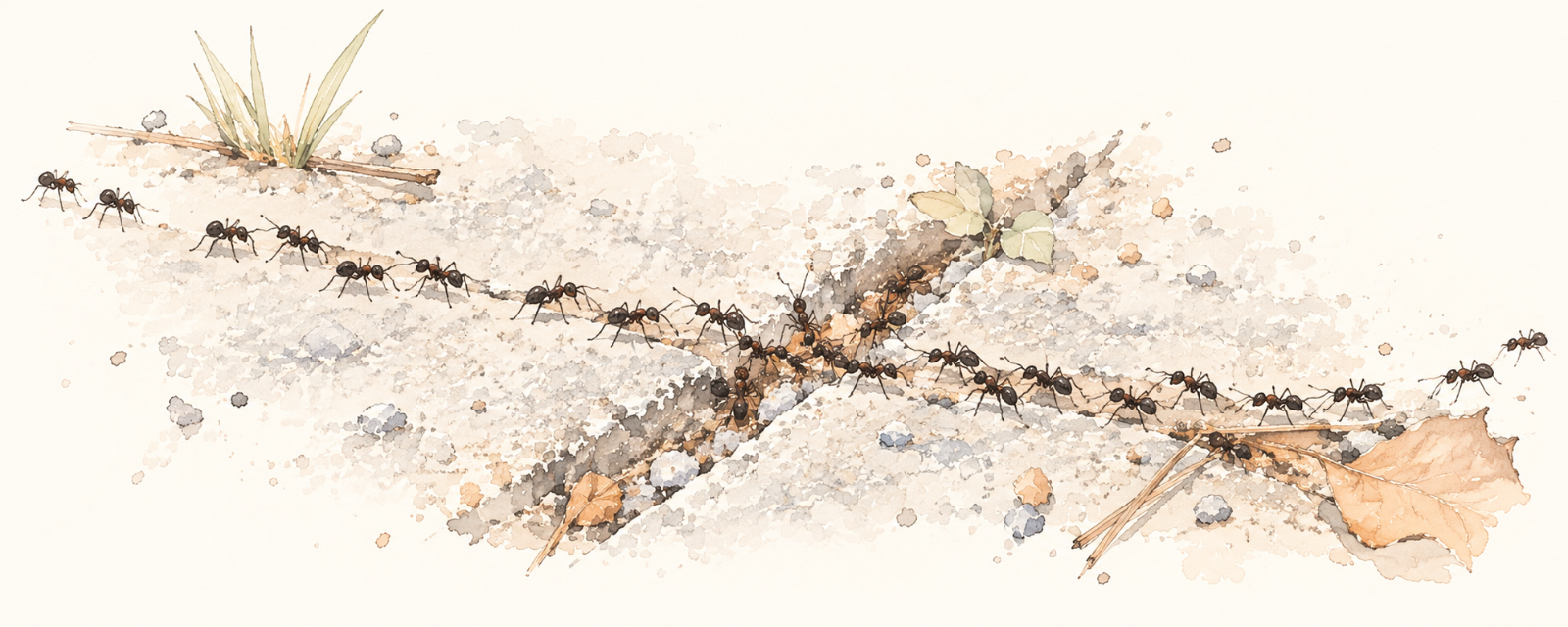
Take that crack in the pavement. The ants in it are almost certainly pavement ants, the most common ant on sidewalks across southern Canada, and they are newcomers here too. Their ancestors arrived from Europe sometime in the 1800s, probably in the soil that ballasted cargo ships, though that’s still an educated guess. Every spring, rival colonies meet along their boundary and fight it out in the open, thousands of workers locked jaw to jaw, packed so tightly that the edge of the sidewalk looks like someone poured a stripe of shiny black liquid along it.
The strangest part is that nobody knows why they do it. Researchers have watched these battles, timed them and modelled them, and still cannot say what starts one or what ends it. Your students will find one before you do, and once they know it is there, they will want to go back and check on it.
Sources: Moss, Swallow & Greene, “Always underfoot: Tetramorium immigrans, a review,” Myrmecological News 32 (2022) · Zhang et al., “From Pavement to Population Genomics,” Frontiers in Ecology and Evolution 7 (2019)
A field trip is a visit. Learning outdoors, on your own yard, week after week, is how students come to know a place and start to care about it.
What about covering the curriculum?
The curriculum is already outside. Whatever you are teaching this week, some of it can happen out the door. Start with a read-aloud or some descriptive writing. Add counting, sorting, and measuring, with observation and classification alongside. You will be surprised by the new words your students pick up, in whichever language you teach.
This is what kept me indoors: feeling unqualified. You are already qualified to teach outside. Any certified teacher is qualified to take a class out, and you know your curriculum. What most of us are missing is not a credential. It is know-how and a bit of confidence, and both of those are learnable. This site is where I share what I learned.
Where do I start?
All those hours spent on the yard with my students became the Thinking Outside learning activity guides. They are divided into three categories (Starting Out, Going Further, and Digging Deeper), and they follow the gradual release of responsibility: I do, we do, you do.
The free Listening Walk learning activity guide is a complete first outing, printable and ready to go: get the free Listening Walk learning activity guide. If you want the thinking behind it first, start with What Is a Listening Walk?.
Going Further: Teaching the Curriculum Outdoors weaves your curriculum in.
Digging Deeper: Student-Led Outdoor Learning is for when you want to sharpen your practice and bring colleagues along.
To learn more about outdoor learning, read What Is Place-Based Learning?
Questions teachers ask
Do I need a forest, or even trees?
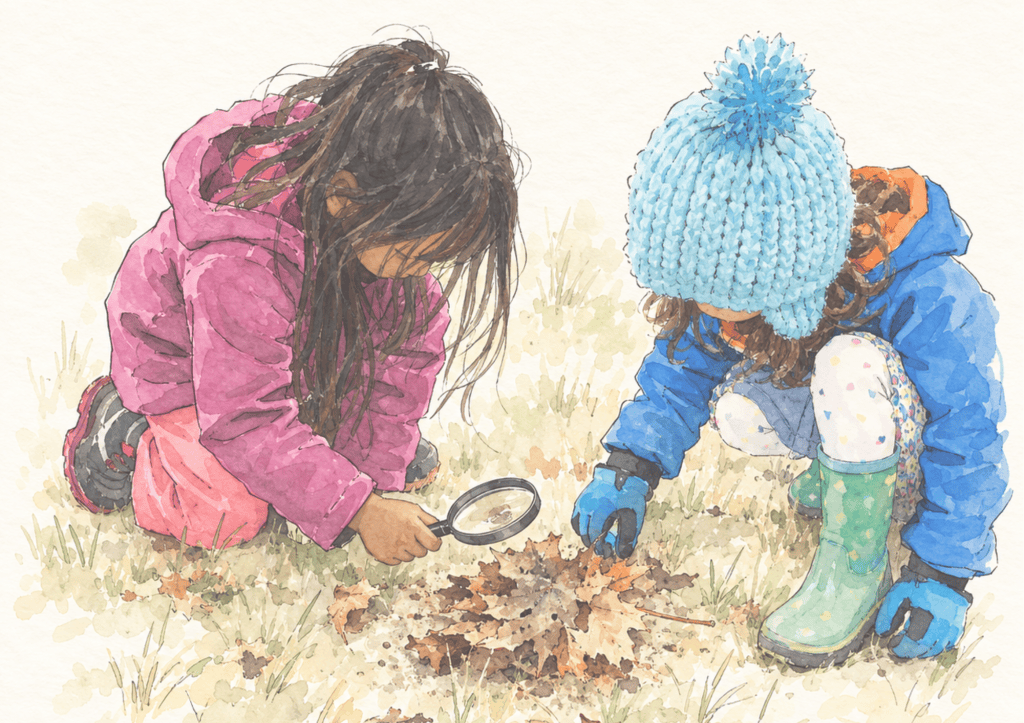
No. A fence line, a strip of grass, and the sky are enough to start. Weather, sound, surfaces, and seasons show up everywhere. Trees help. But students can look closely at anything, and that is where the learning starts.
What about weather?
You go out anyway, dressed for it, for a shorter time. Weather is rarely what stops a lesson. Often it is what the lesson is about: rain, wind, frost, the first snow.
What will my principal say?
In my experience, principals say yes to a teacher with a plan. Have a conversation before, share where you will be, what you are teaching, and how you will assess students’ learning. With a one-page plan, you can settle almost every administrative concern before it comes up.
Does this replace my program?
No. It is your program, taught in a different room. The curriculum expectations you are covering this week do not change because the four walls are gone.
How is this different from recess?
Recess is the students’ time, and it belongs to them. Outdoor learning is class time, and I tell them before we go out: this is not recess; it is still learning time. The yard is the same. What we are there to do is not.
How often do I need to go out?
Once a week to the same spot is the pattern that works. The learning comes from going back, and in my experience, it takes about six visits before a class knows a place well enough for the noticing to get good.


Leave a comment